Workshop Design
Abstract [TL;DR]
Understanding how users perceive personality in conversational AI is critical for designing ethical and engaging chatbots. This study presents a participatory workshop methodology that investigates anthropomorphic trait attribution to ChatGPT, Perplexity, and Gemini through mood boarding, task allocation, personality assignment, and embodiment scenarios. 16 participants were involved in the qualitative study which included design students and faculty recruited through convenience-based sampling. The workshop surfaces both implicit and explicit associations in users through a layered approach which moves from context-setting into defined personality associations. Participants imagine themselves as the chatbots responding to scenarios, revealing how perceived personality influences language and actions. This flexible methodological approach allows for effective inquiry into human-computer interactions by researchers to design better user experiences.
"ChatGPT just gets me!!"
ChatGPT (emphasis here) occasionally (emphasis ends) does get you, me and everyone well. Simona and I had heard this and "He is so friendly!!" and "Perplexity is kinda like a professor..." and more. We were extremely intrigued by this phenomenon of associating anthropomorphism among our peers who would often affiliate certain personality traits with chatbots like ChatGPT (for example, “GPT is so friendly!") and gravitate toward a particular chatbot on the basis of their perception of it as a familiar human-like entity.
Sometimes what the chatbot “comes off as” gets amplified by sycophancy and hallucinations (Zhang et al. 2025). This plausible association of human-like characteristics and perceived personalities with such chatbots is what inspired our research study.
CHI 2026 was just around the corner, so we thought of submitting under emotional and affective computing since we had found an interesting area to research under [spoiler: we didn't get selected, but nevertheless, we could take the feedback into action].
S.No.
1
2
3
4
5
6
7
Activity
Mood boarding
Task Allocation
Group reflection on task allocation
Personality allocation
Collective personality combining
Embodiment scenarios
Group reflection and debrief
Individual
Individual
Group
Individual
Group
Group
Group + Individual
3
3
5
3
5
3 + 2 (for replies)
5
Nature of Activity
(Individual/Group)
Recommended time limit
(in minutes)
Workshop
W1
W2
W3
No. of people
8
4
4
Group division
Designation
Age
Gender
Assigned chatbot
2 groups of 4
2 groups of 2
1 group of 4
Students
Students
Faculty
19-20Y
19-20Y
Mid 20s
to late 40s
7F, 1M
3F, 1M
2F, 2M
ChatGPT, Perplexity
ChatGPT, Perplexity
ChatGPT
To understand users' associations of personality with LLMs, HCI researchers extended the OCEAN model with extra parameters to better fit chatbot behaviour (Kovačević et al. 2024). Others staged persona experiments with archetypes like The Expert, The Friendly, and The Machine to see how people’s feelings shift depending on which “AI character” shows up. More recent participatory work uses workshops where people embody stakeholder personas in speculative scenarios, revealing how their reasoning and emotional needs around products move and morph in context. But there is still very little that deliberately combines these participatory methods, embodiment, and task-based emotionality to trace how people collectively decide “this bot feels like…”— which is precisely the corner we decided to explore.
Wait why did you call it friendly??
RESEARCH OBJECTIVES:
To determine the impact of any anthropomorphic associations with LLMs in users’ choice of LLM
To examine the effects of such traits of LLM in user experience while interacting with it
To Explore how deliberate HCI design choices in creating such associations with LLMs are perceived by and translated to users
We created a workshop design for understanding the implicit and explicit associations through a meticulous sequence of participatory activities – mood boarding, task allocations and embodiment. The workshop relies heavily on insight generation through discussion-based reflections and adaptive reflexivity of the researchers. It further serves primarily as a generative device that can be calibrated differently according to various contexts and offers a high degree of malleability. This allows for deeper inquiries and allows studies into user experiences and people’s emotional connections (or the lack thereof) with such chatbots in the field of HCI (Peter et al. 2025; Li et al. 2024).
The activities are fun, we promise.
The workshop consists of 7 activities, each serving a particular function. The sequence and duration of the activities account for the participant's focus, fatigue and ease into collaboration. Our qualitative sample consisted of 16 participants (design students and faculty) recruited through convenience-based sampling.
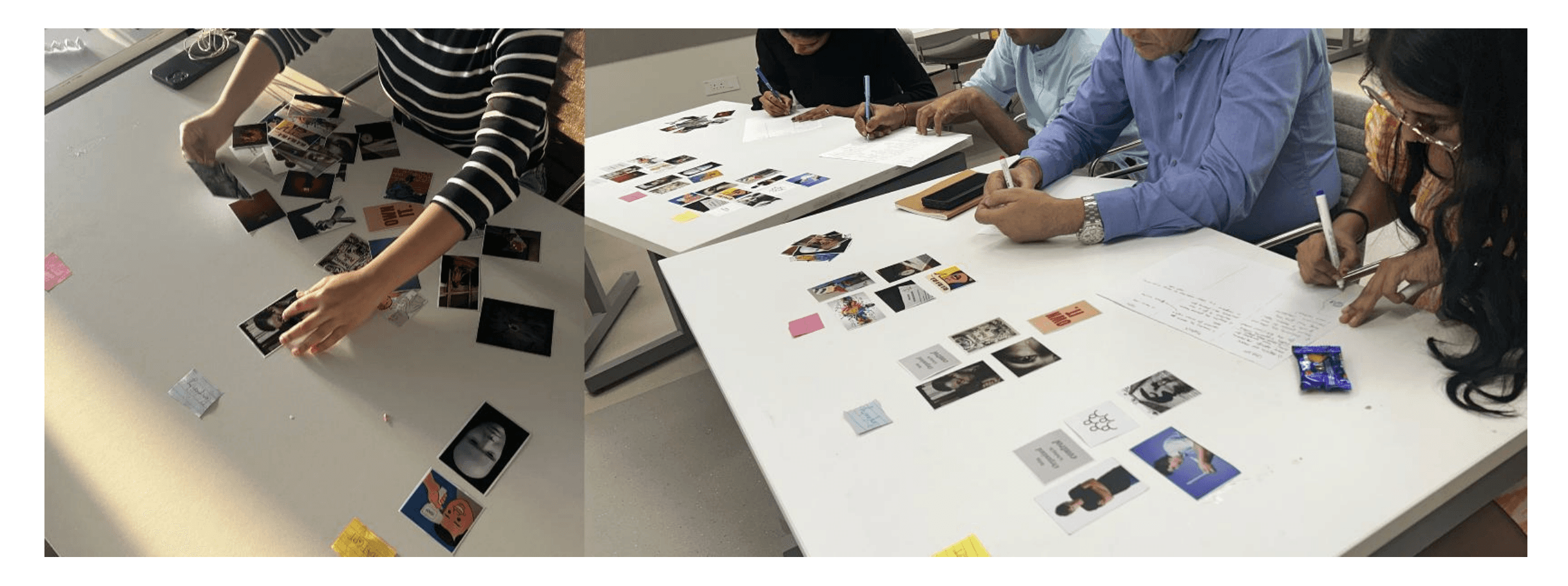
To start off, each participant was given a set of 30 images, and they were told to create mood boards of a maximum of 5 images for the three bots – ChatGPT, Perplexity and Gemini (on the basis of 'vibe' of the photos). This intensive, non-verbal process immersed participants into the context, and the visual collaging was used to elicit emotional needs that direct questioning often misses.
Then they were told to write down under the chatbots all possible tasks they perform with that particular LLM. This acts as a bridging activity as they engage with their subconscious distinction and purpose linked to using these bots. Afterwards, the participants are divided into groups, and they share why they choose to do (or not) certain tasks with specific bots. This further allowed users to publicly declare their reflections or blind spots in their choices.
After reading the scenarios, they collectively wrote a response of around 40 words and typed it on the interface. Simona and I then replied with one of the pre-defined replies. Back-and-forth occurred until the actor terminated the conversation (decided by the researchers). The activity was then repeated with different actors. The coding of follow-ups was done with appropriate branching, accounting for the kind of responses that we expected from the participants.
Try it out for yourself! Write a reply and enter any of the below codes (case sensitive):
a1,a2,a3….a6 b1-b6 c1-c4 and d to end the conversation
Perplexity is a worm…
We conducted a total of 3 workshops with varying participant sizes and demographics. The iterations were done to assess the effectiveness of different formats with varying homogeneity within participants. The data collected was coded through content analysis.
-are some amongst the many interesting descriptions that emerged through the activities. Most of these also emerged unprompted when participants tried to explain their reasoning to their group members. Some participants faced confusion with image generation capabilities of chatbots, (“This image looks like it was generated by Gemini.”).
“nerd”, “narcissist”, “drunk”, “curator”, “worm”, "professor", "optimistic"
"I'm actually a top 5% ChatGPT user…"
"Erm actually… Perplexity uses the LLMs of ChatGPT and Claude…"
The existence of a few such expert users also shifted the focus sometimes and affected group dynamics. Introducing more mixed-group compositions, anonymous elicitation components, or individual pre-workshop probes could help mitigate such effects.
While embodying, participants often focused on language structures and phrases chatbots use. While these can be useful and indicate a personality type, it may just shift focus to just recognising highly prevalent patterns in speech (starting with acknowledgement, giving options, validations, etc.).
The first workshop revealed that dividing participants into two groups of four made facilitation and note-taking was difficult. The tight timeframe also increased the influence of dominant voices— an issue better managed in later workshops, especially when both of us facilitated a single group.
“Oh this looks like it’s ChatGPT”
Across workshops, participants frequently reacted to interface design (e.g., comparing it to ChatGPT) and later recognised their own implicit biases during debriefs. Preferences for specific interface–tone combinations (e.g., dark mode appearing more trustworthy) highlighted how design elements—grammar, interface, and UX—shape perceptions and LLM choice. This highly underscores the need for UX designers to account for anthropomorphic associations without risking overreliance or validation-seeking behaviour.
Overall, the workshop offers a high degree of malleability and flexibility to be retrofitted into multiple contexts as a methodology. The project shaped my vigour for research majorly. Everyone deserves a friend willing to discuss frameworks and methodologies on the weekend over coffee and maggi.
The conclusion is what I've provided above; limitations are what we couldn't do, and future work is what we'll continue doing since designing doesn't feel like work to us. Stay tuned to find our why Perplexity is a worm though.
After the group reflection with researchers, they are told to revisit the tasks and allocate a personality trait to each task for each chatbot. The groups get assigned a chatbot, and together, they discussed 5 personality traits that they would declare the most prominent. This leveraged and amplified the perceptual recall cultivated through prior exercises, moving explicitly into the active articulation of specific personality traits.
The participants were finally asked to imagine a world where humanoid robots based on the chatbots have been deployed and people interact with them regularly (for the context of this study, since it was held with students and faculty, the robots were deployed in the college). In their groups, they assume the role of the chatbot and are presented with scenarios in which different actors ask them questions.
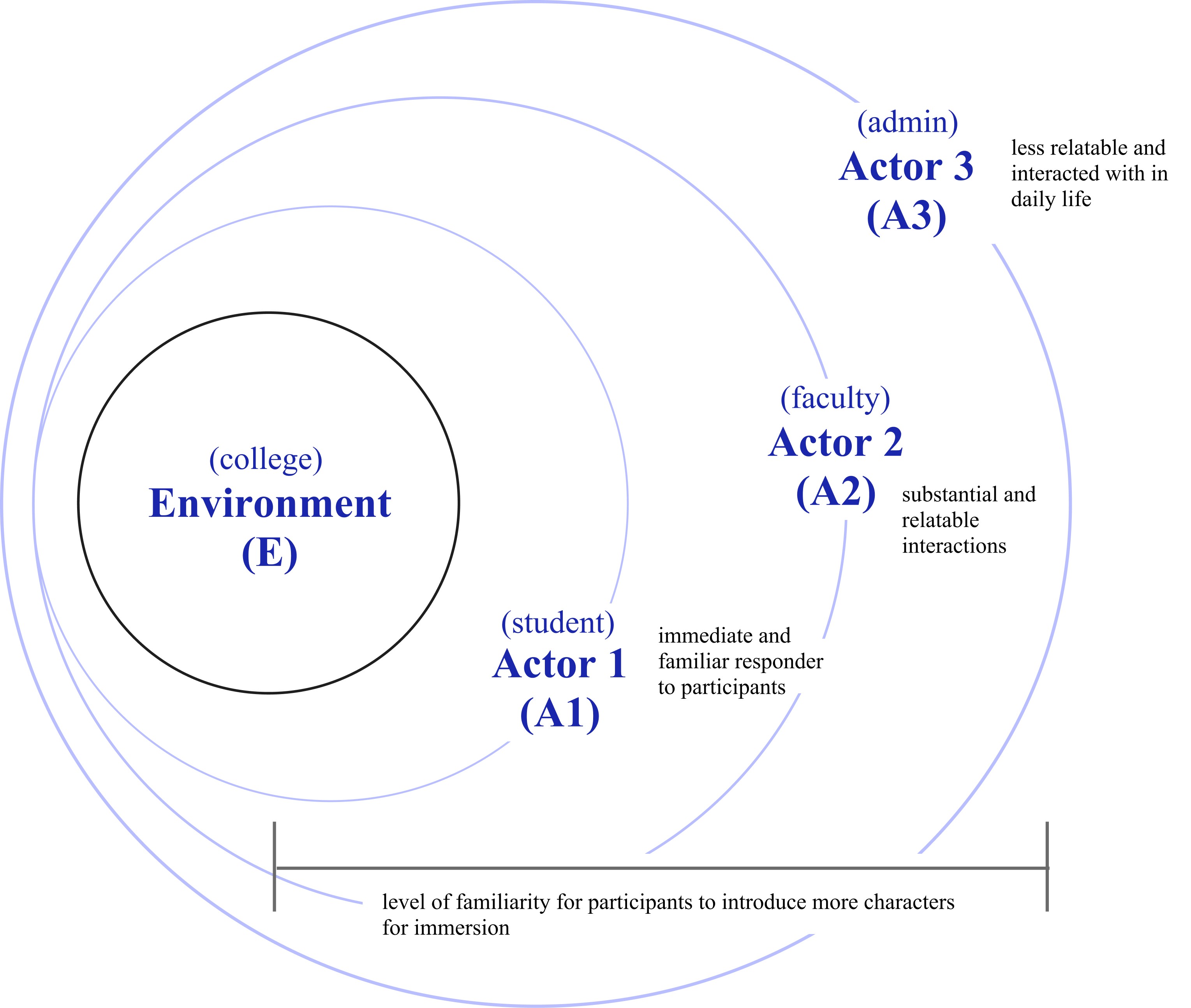
To ensure replicability, grounding and stronger immersion, we developed an environment-actor model with three actors (A1, A2, A3) and a familiar environment (E) which contains substantial, relatable interactions among these entities and the environment itself.
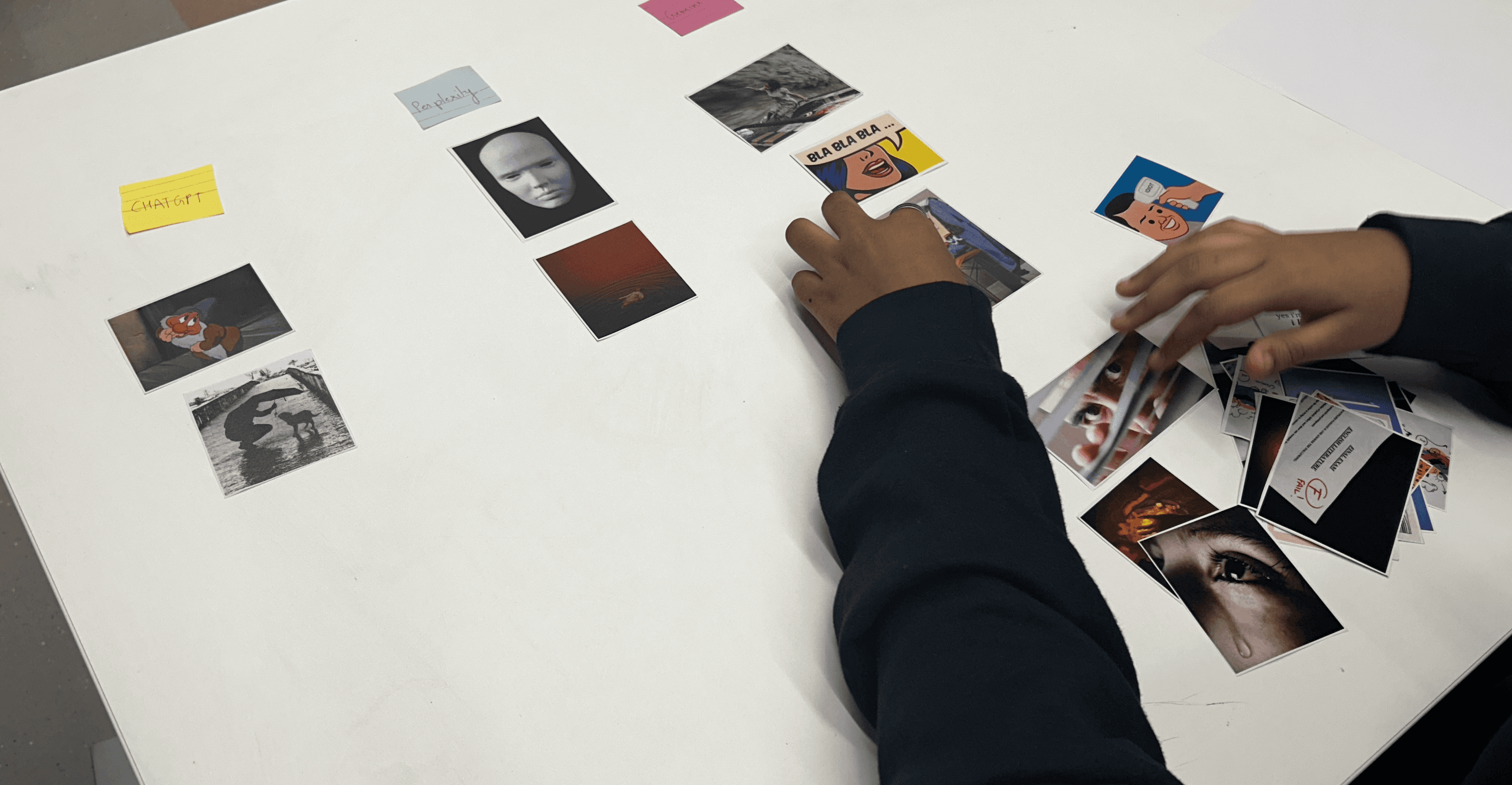
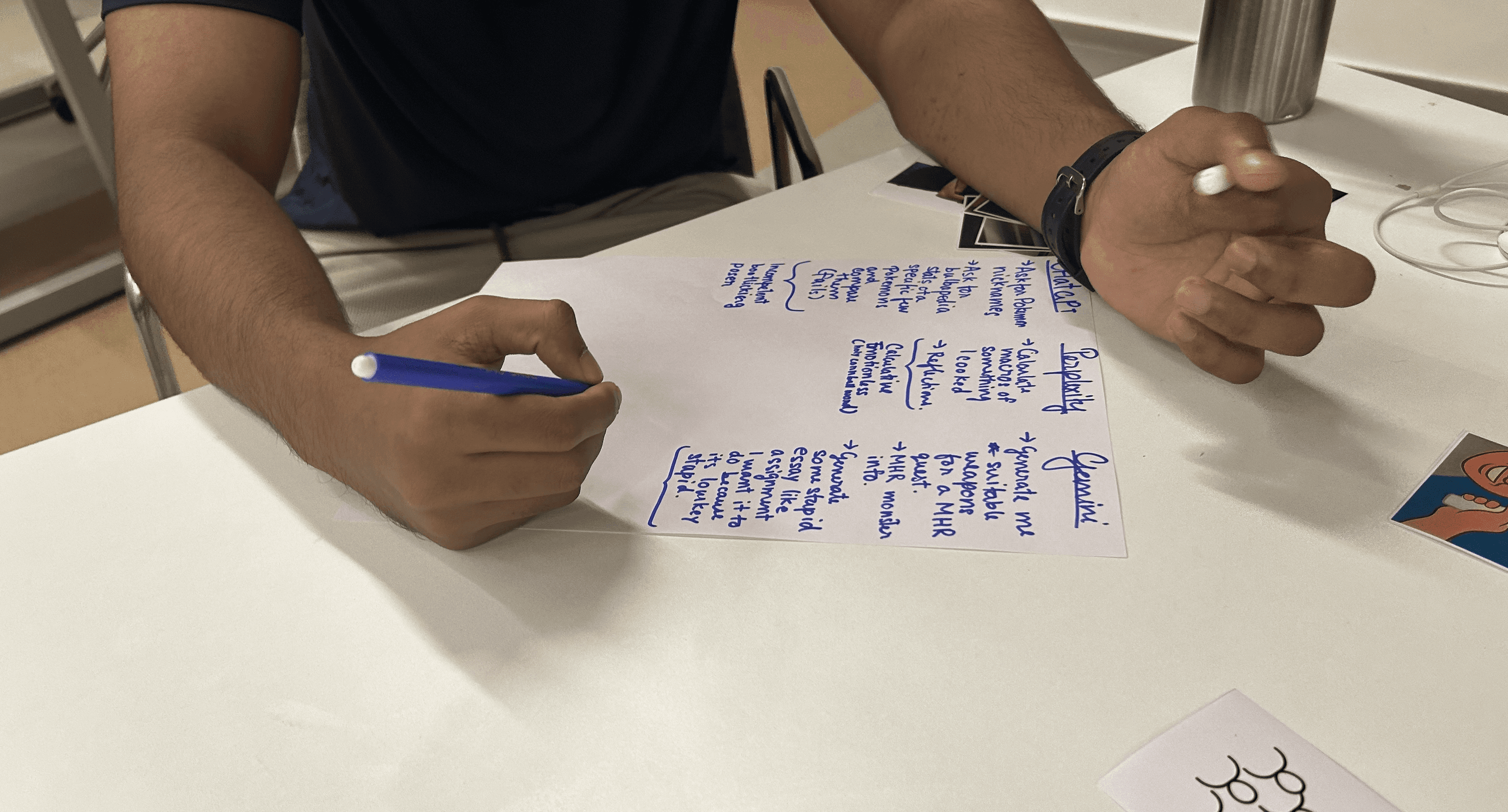
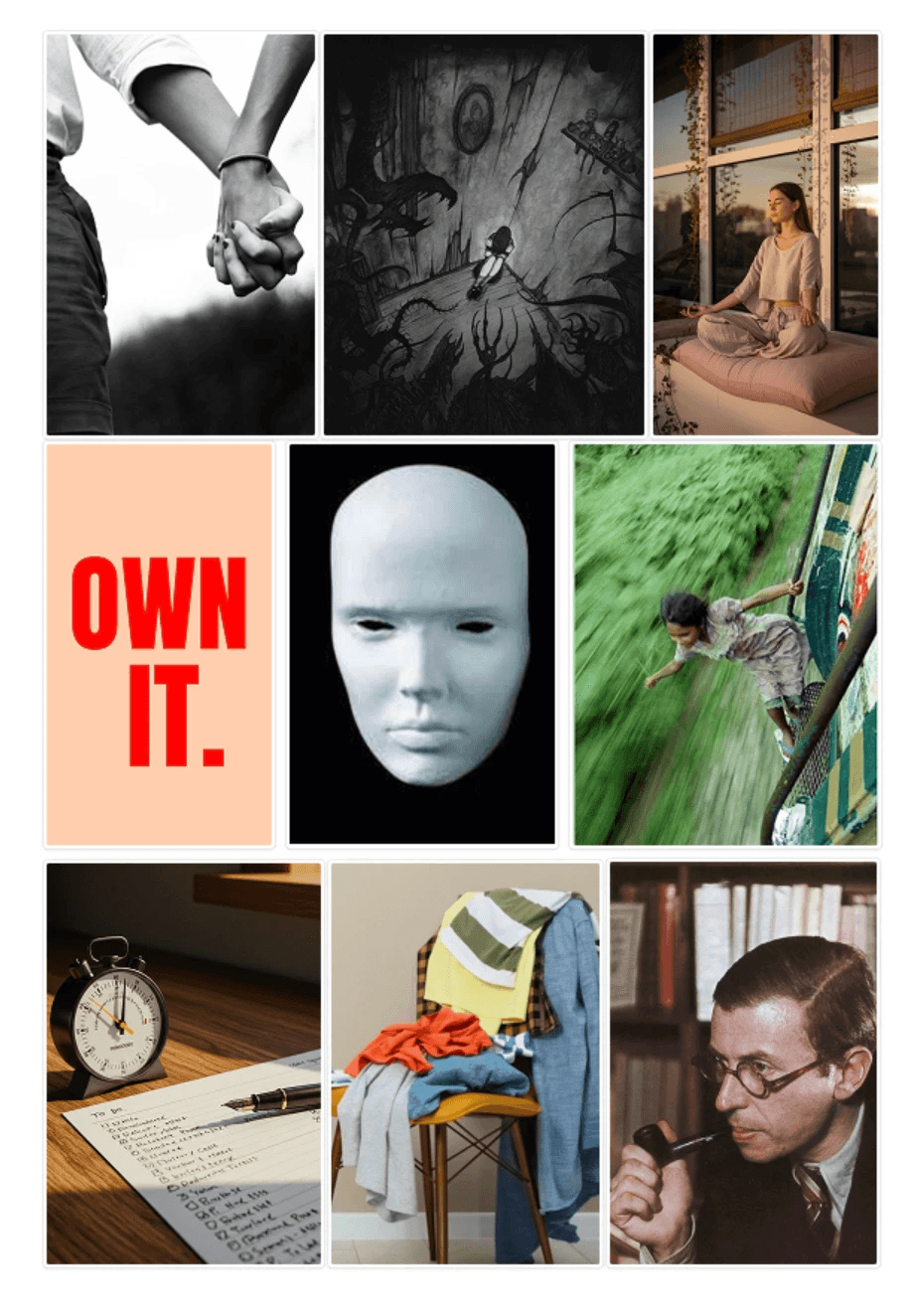
Table with list of activities in the workshop
example images used in moodboarding activity
images from the workshop
Environment-Actor Model
Example interfaces from Figma Make used for embodiment
Next Project