What do we think of when we think of designing for wars?
We imagine the design of arms and ammunition or perhaps the strategy and tech needed to win a war. As first years tasked with a design brief to translate elements of geopolitics into a generative device (like a game), my teammates and I chose proxy wars and were unprepared to be bombarded by almost no research papers on Google Scholar that mapped the immediate role, contribution or impact of designed systems in wars. Swasti, Ved and I frantically began piecing together fragments of different systems to call it 'design' (while being mindful of our infancy in the discipline itself).
This notion of design being associated only with weaponry in this sector becomes a highly debatable topic, especially in recent times where unfortunate realities like the Palestinian genocide and the India-Pakistan War threaten the livelihoods and futures of our generation as we know it.
A bomb exploding in a part of the world serves not as a thing but as a distributed process. Images of bomb fragments from Yemen were circulated online, which investigators then matched to trace specific manufacturers. All of these systems are designed. One could stress that they aren't designed by designers, but the narrative, media, creation, and amplification are in the hands of designers, now more rampant than ever. This compels me to ask: What is my role as a designer within these complex systems of creation, extraction, and destruction?
)
Are Wars Designed?
ARES: the board game
Abstract [TL;DR]
A competitive card-based game on proxy wars where players team up as Diplomats and Designers of two countries to come up with solutions for wartime scenarios consisting of systemic failures or product flaws. They are provided with statistics and resources as constraints, along with time limits. The aim for the players was to pitch their solutions to the Supply Chain Expert who would scrutinise and reward the team with the better solution. But a twist! Every round the board switches, compelling the players to now ideate for the other country, thus securing the focus of the game to designing better for the greater good. The insights generated from user testing were further used to create principles of good design for future designers.
The world of Proxy Wars
A proxy war is fought between two main countries; it involves superpowers supporting opposing sides in a regional conflict through funding, weapons, and political leverage without direct combat. Its ever-changing characteristics allow it to exist with minimal engagement by force, beyond the traditional battlefields.
Proxy wars can lead to prolonged conflicts, often due to superpowers' ulterior motives, such as maintaining strategic influence or securing resources, which can drive them to manipulate the conflict through control of supply chains, political advantage, and misinformation. My team and I decided to navigate the pre-war tensions and conflicts that lead up to the onset of a violent declaration of war.
ARES: generative device
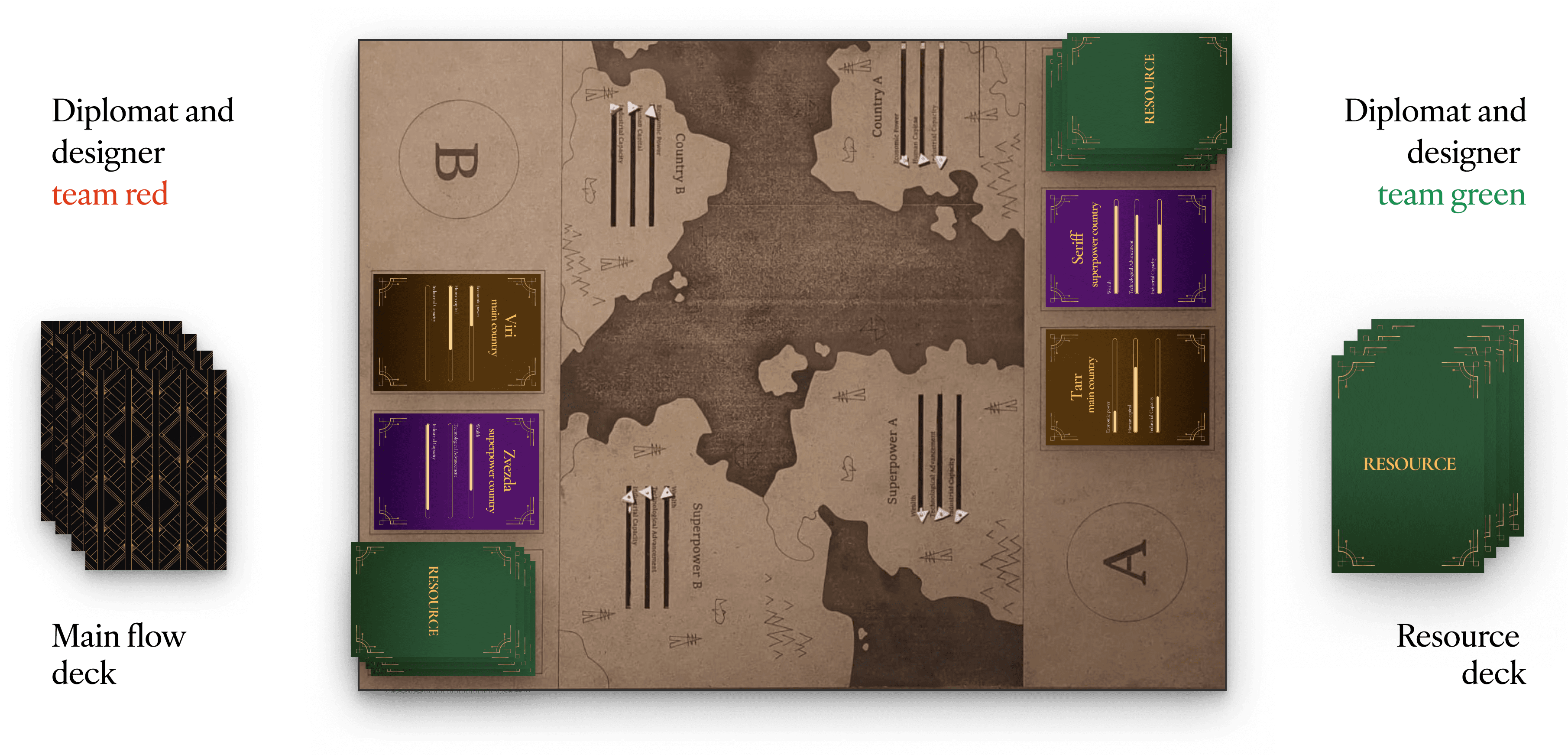
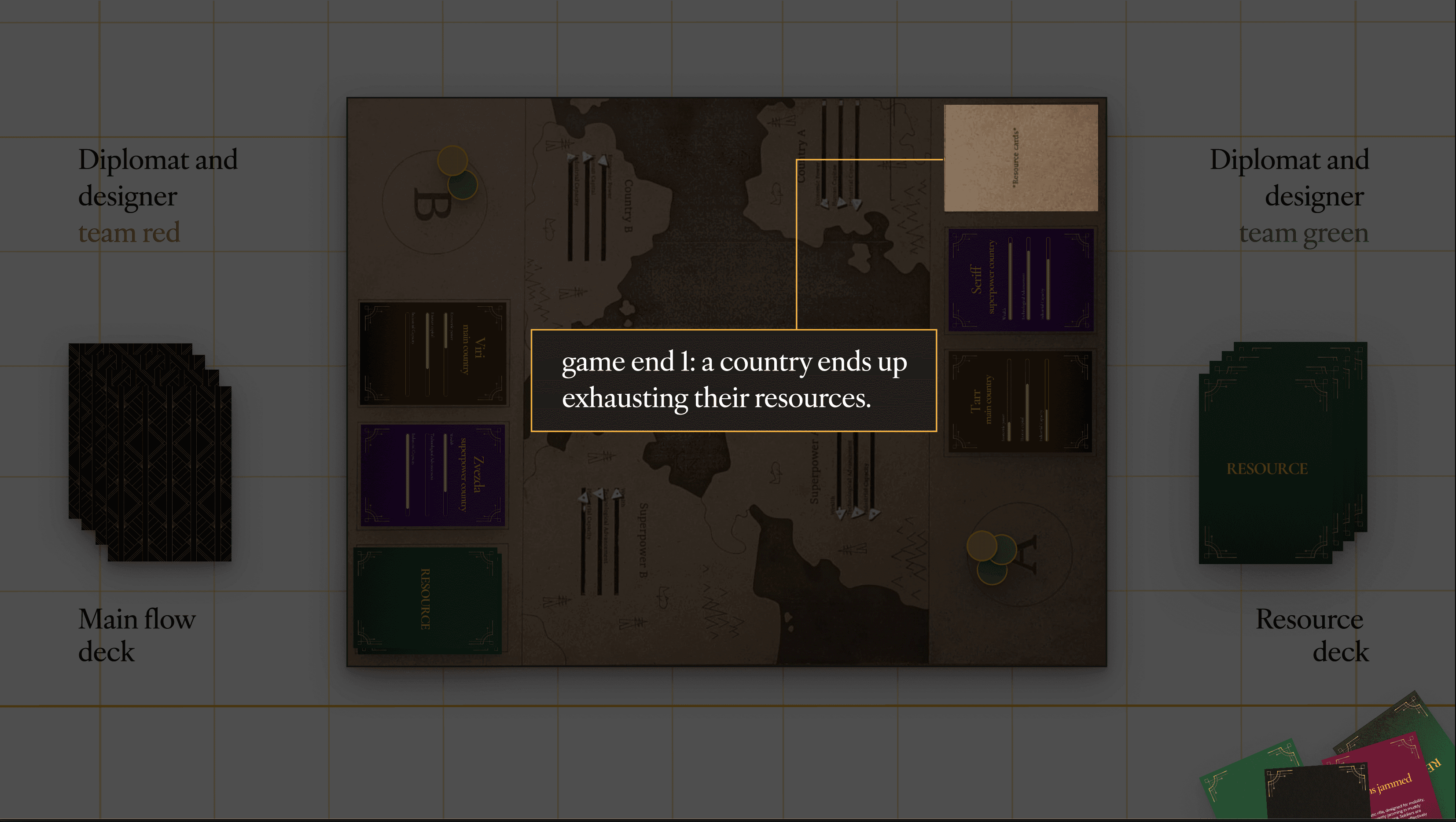
We created ARES, a competitive card-based game where players find solutions for systemic failures or product flaws that happen during wars. The setup involves a board which contains the two countries, A and B, and the placeholders for the country, superpower and the resources allocated to each. People are divided into 2 teams of one diplomat and one designer each. Both teams, team red and team green, get assigned a country at the start. The map contains world statistics like the countries' wealth, technology, human resources, etc., which can change throughout. Now the game master, who is the supply chain expert here, shuffles the main flow deck.
and presents a scenario to the teams. These scenarios could be issues that affect the countries individually or could be an attack from a particular country. Groups discuss their solutions and allocate resources accordingly. The supply chain expert makes a decision based on the solution and awards the point. But wait, there's a twist!
fig: game board (interact with the main flow deck!)
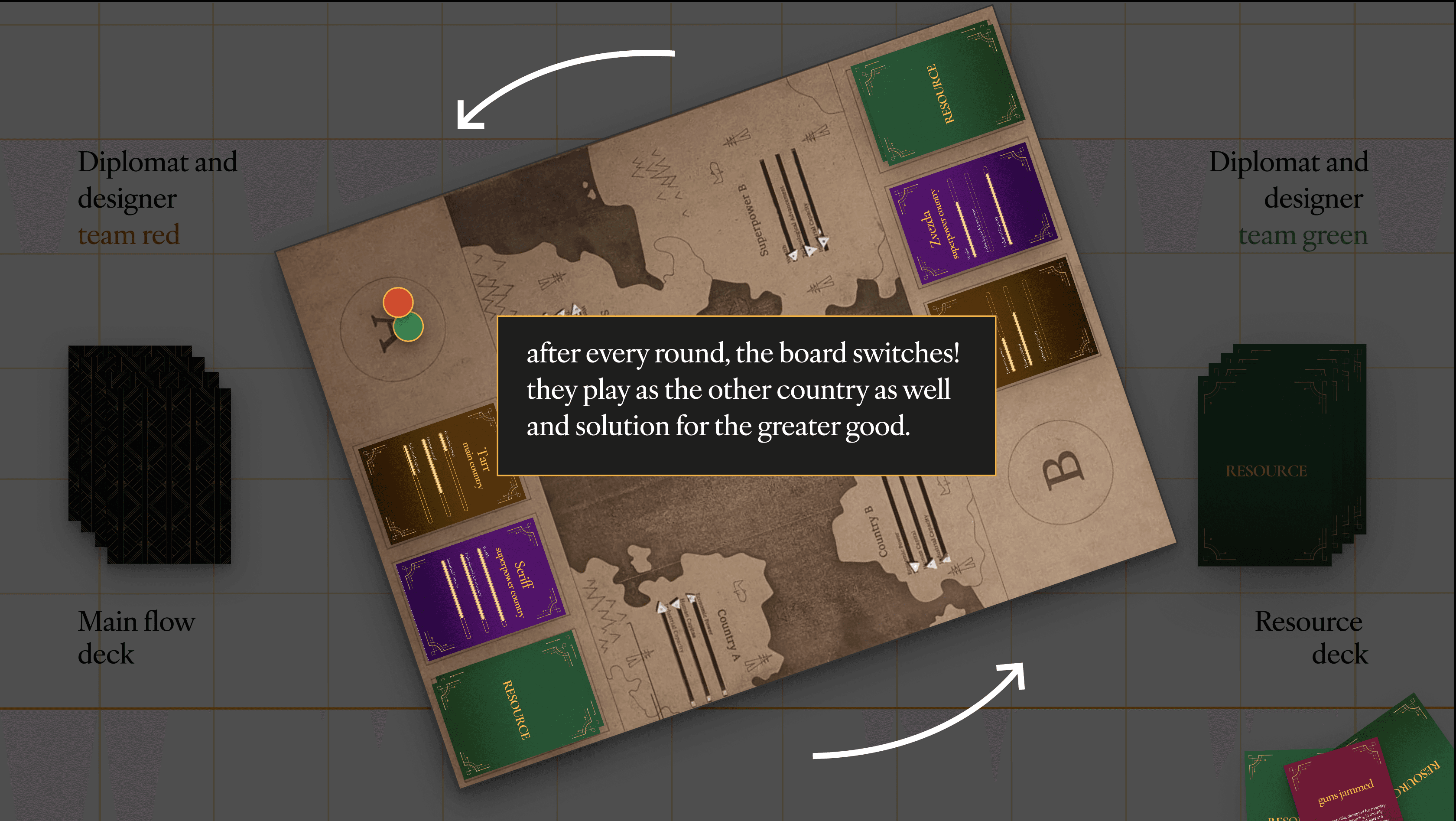
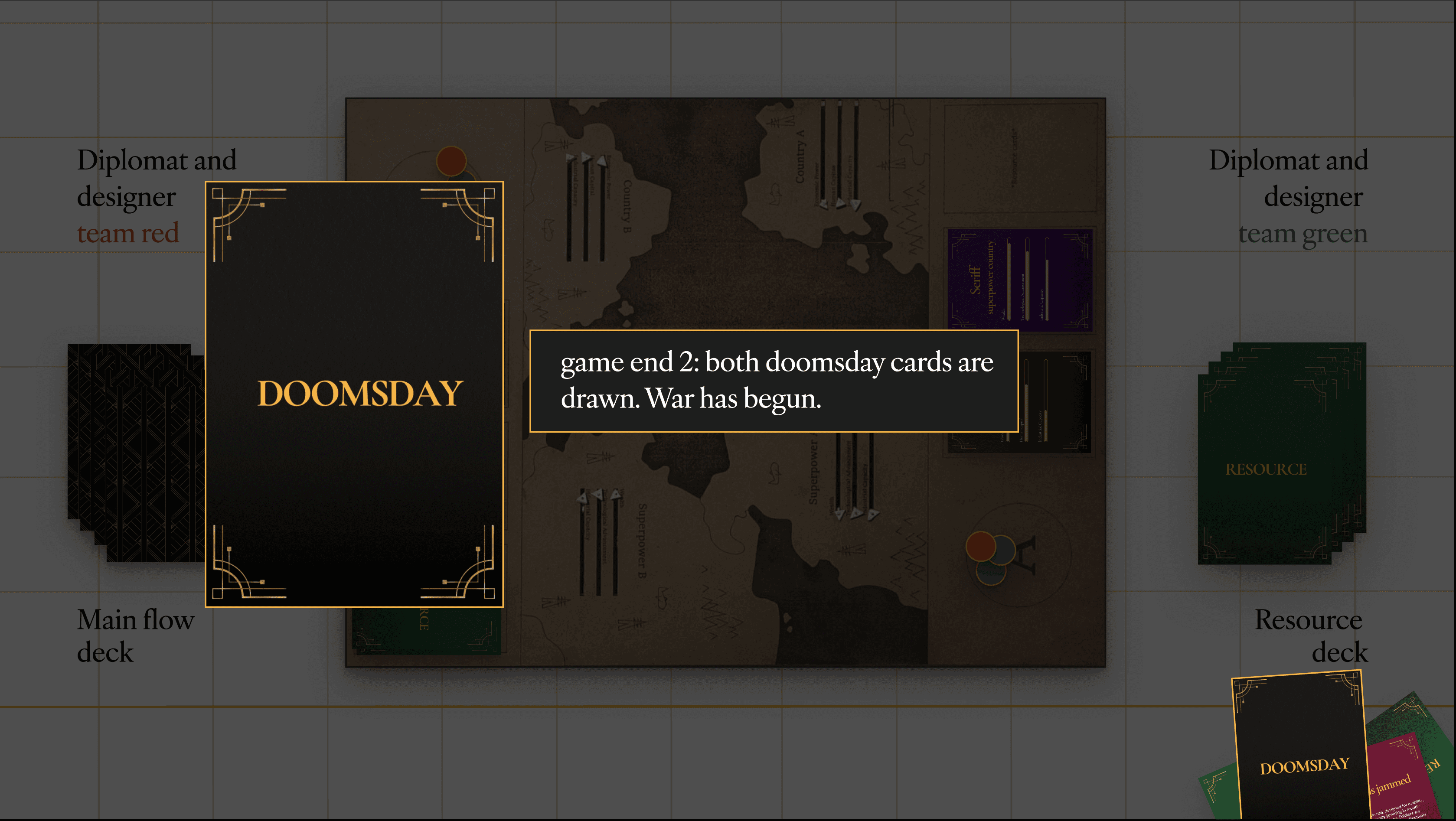
As the developers of the game, our objective was to extract design principles from people's choices and decision-making involved in the gameplay. Therefore, it was imperative to have an aspect of win and loss for players and not for the countries themselves so that the focus stays on solutioning for the greater good of the whole world.
The game ends in two realistic ways: if either country runs out of resources or if the doomsday card (shuffled into the main flow deck) gets played. This was done to signify that war is, yes, inevitable because of factors beyond the control of a handful of people working for the cause. The takeaway as designers remains in acknowledging the capacity to minimise suffering and death tolls through our design decisions.
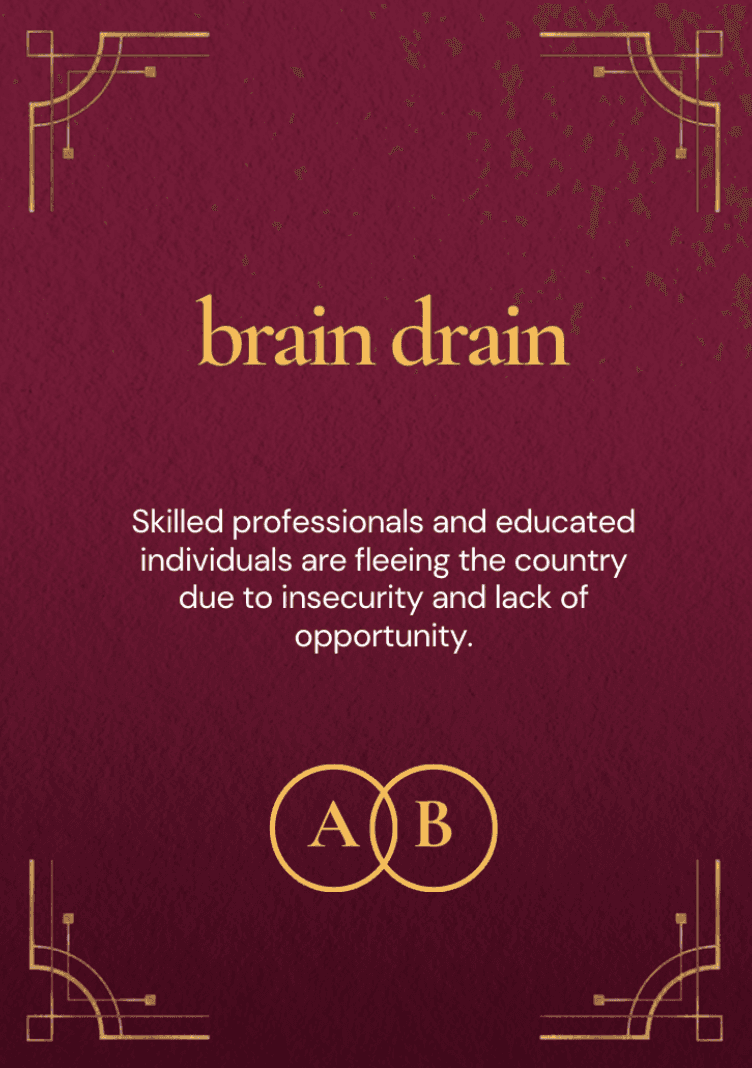
While researching for Ares, we came across multiple instances during major wars and conflicts around the world which could be counted as 'design flaws' and constructed our scenario cards loosely based on those events.
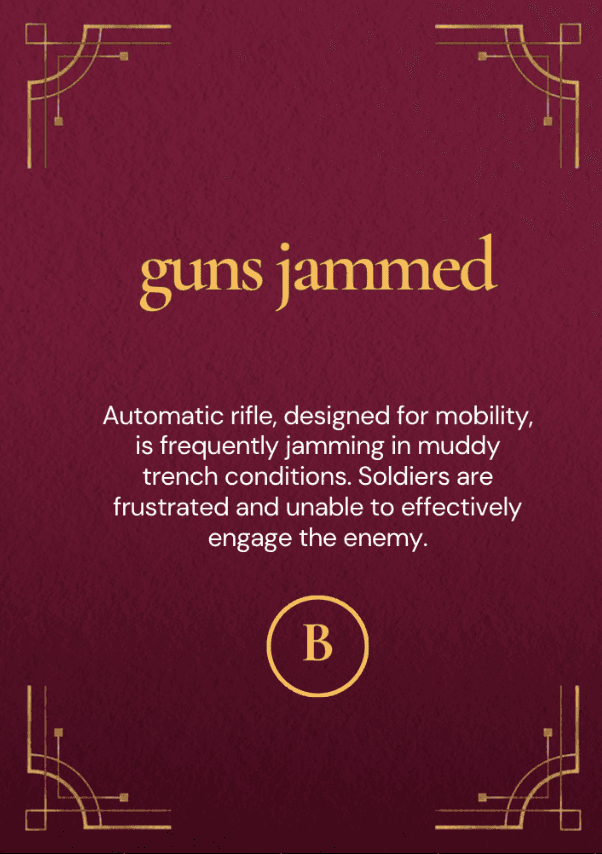
Fusil-Mitrailleur Modele 1915 CSRG (Chauchat) Light Machine Gun (LMG) (France , 1915). A gun that was quoted by many to be-- “the worst machine gun ever produced”
“The Iraqi Brain Drain: the devastating daily violence has caused many of Iraq's engineers, doctors, lawyers, and professors to flee the country, while some of those who remain have been killed. The massive "brain drain" may eventually have a chilling effect on Iraq's future ability to rebuild itself.”
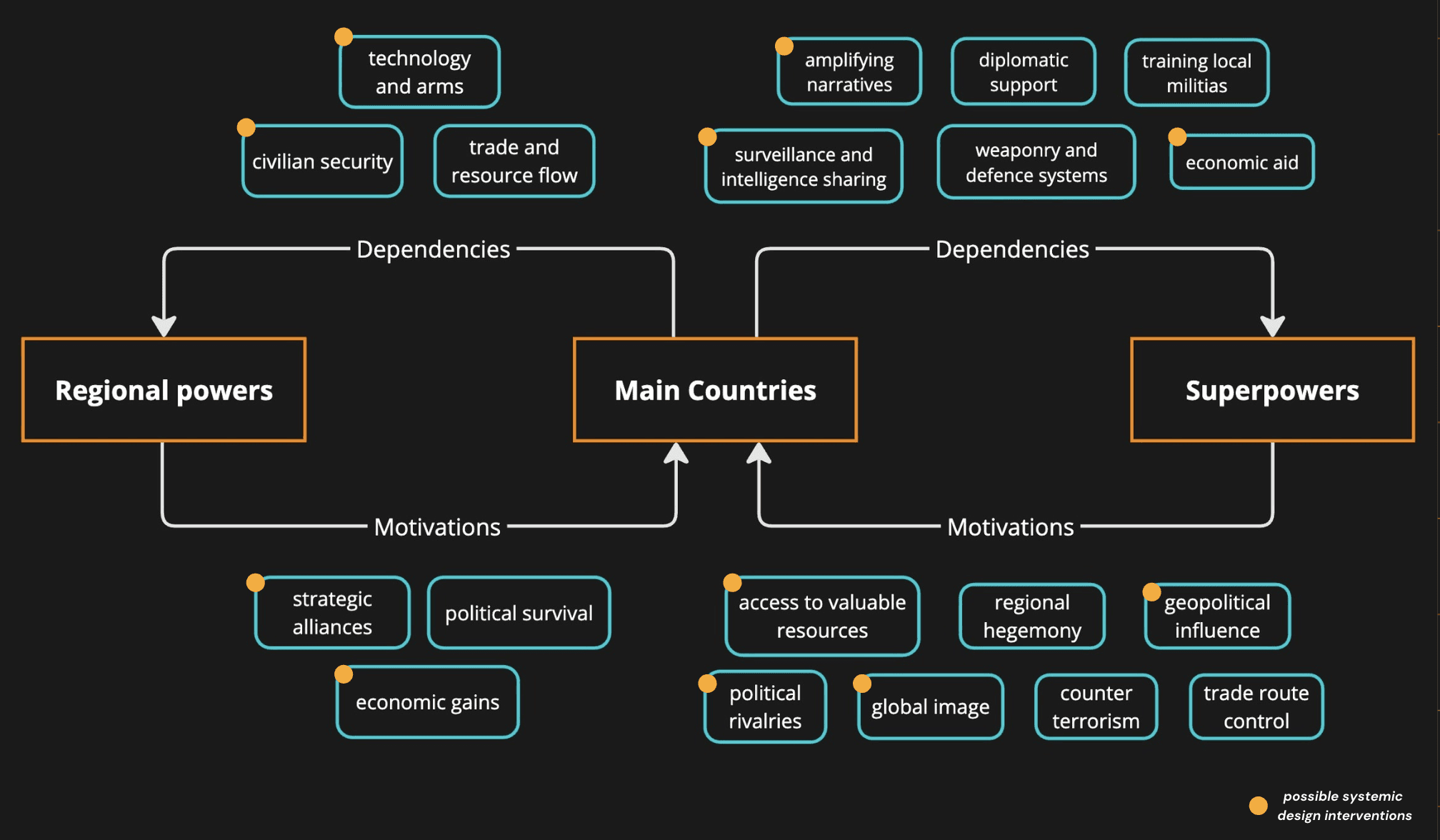
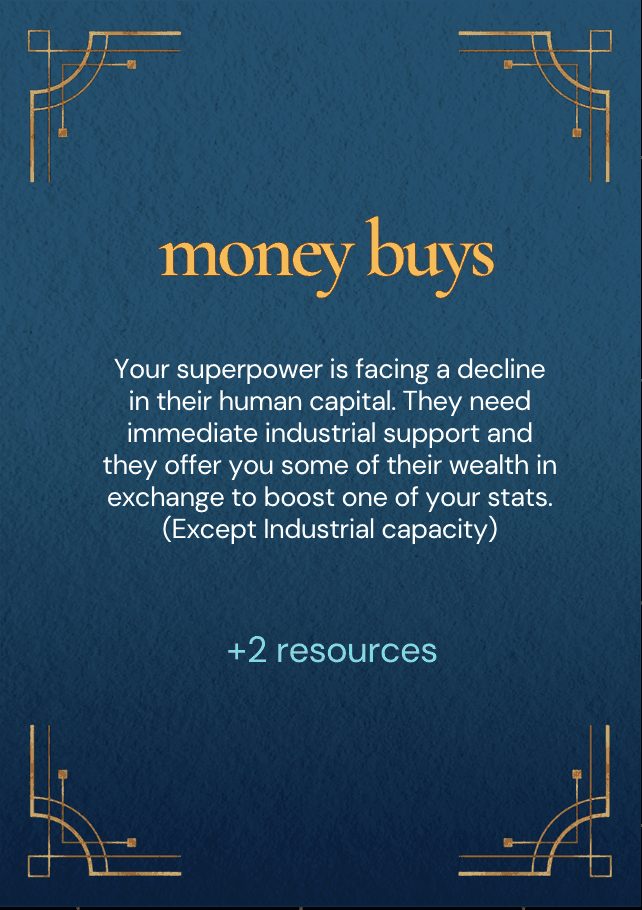
The main flow deck also comprises trade cards and infrastructure cards. Infrastructure cards are an indicator of the wicked, spontaneous or simply unavoidable triggers during tensions of war that a nation cannot be expected to solve. They also exist to speed up the pacing of the game and to give a more intuitive understanding of resource consumption.
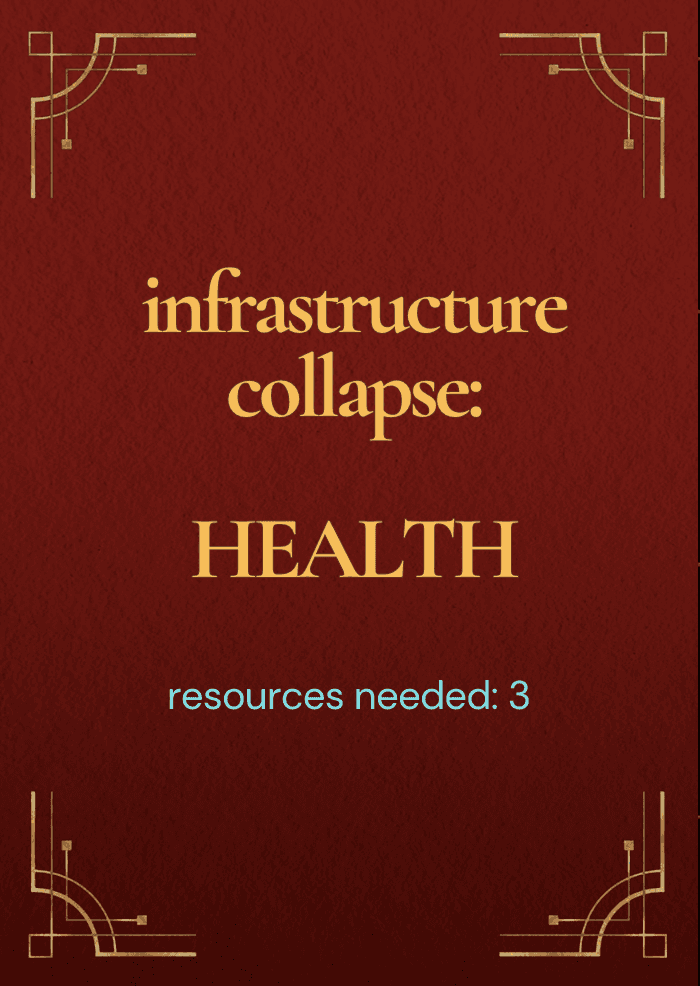
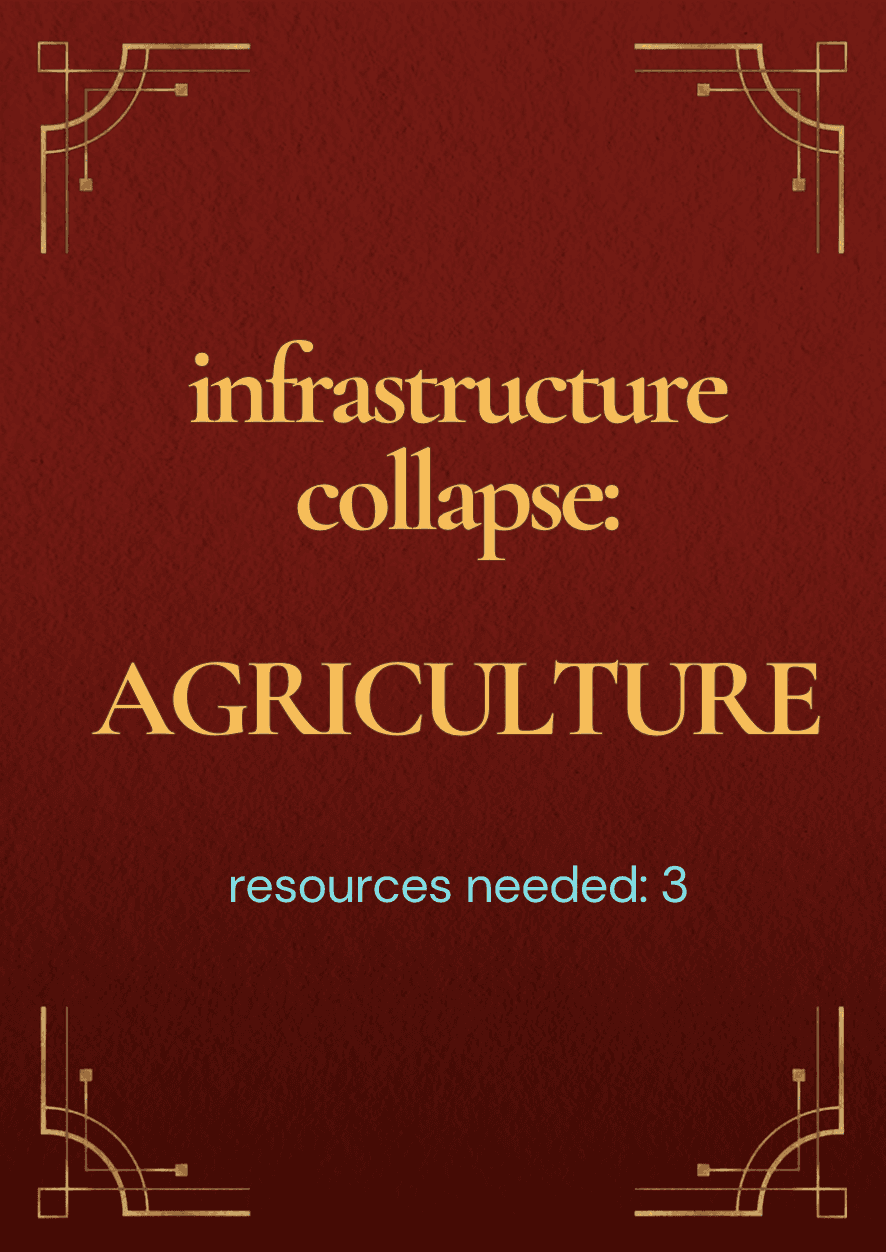
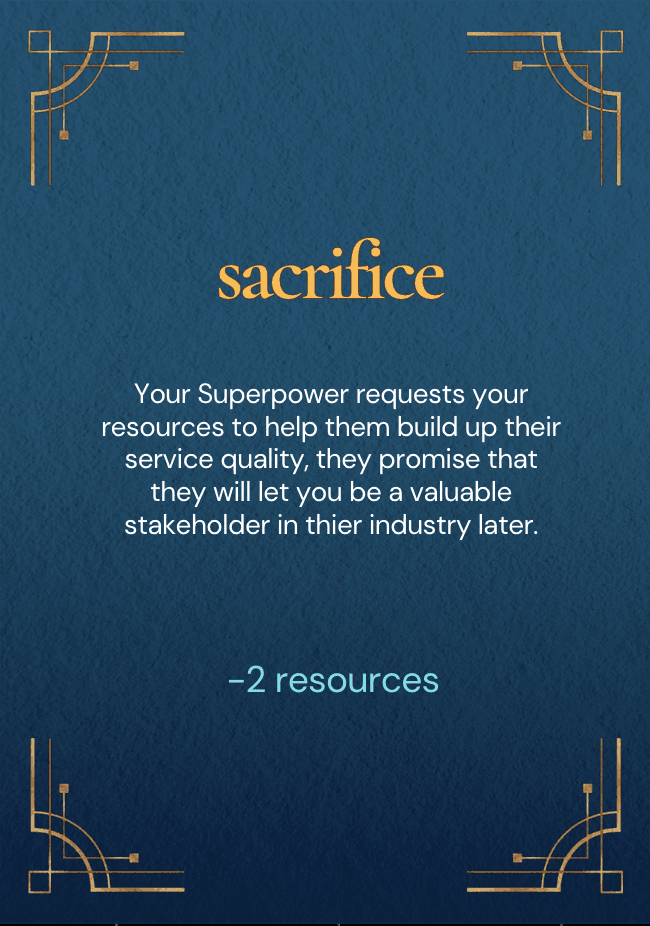
Trades translate the ulterior motives of Superpower allies in a regional war into game elements. Superpower allies tend to benefit from these wars and will intervene to gain something from their ally as deserved help or fuel the tensions and prolong the war by giving them resources to fight as a goodwill gesture.
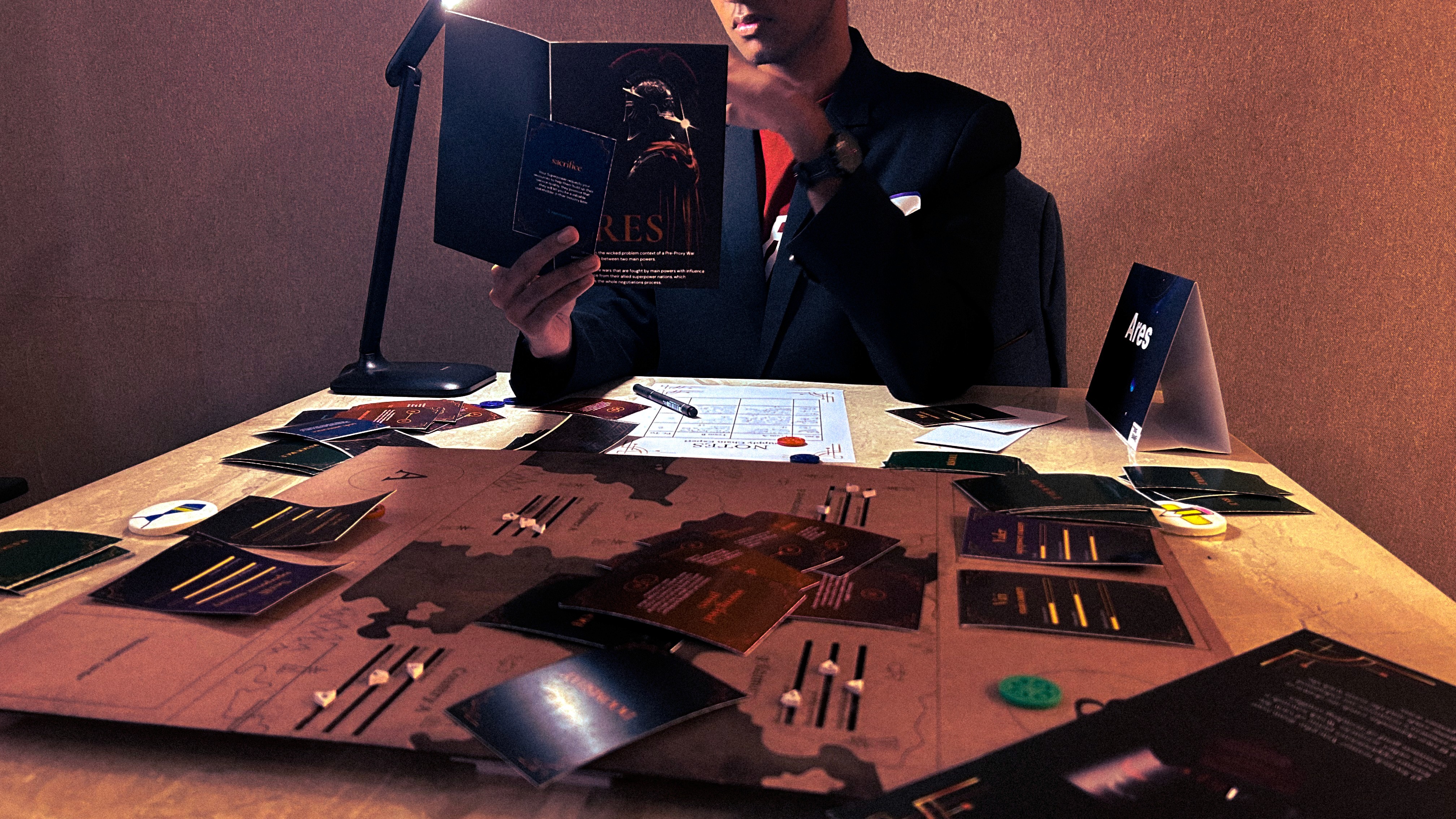
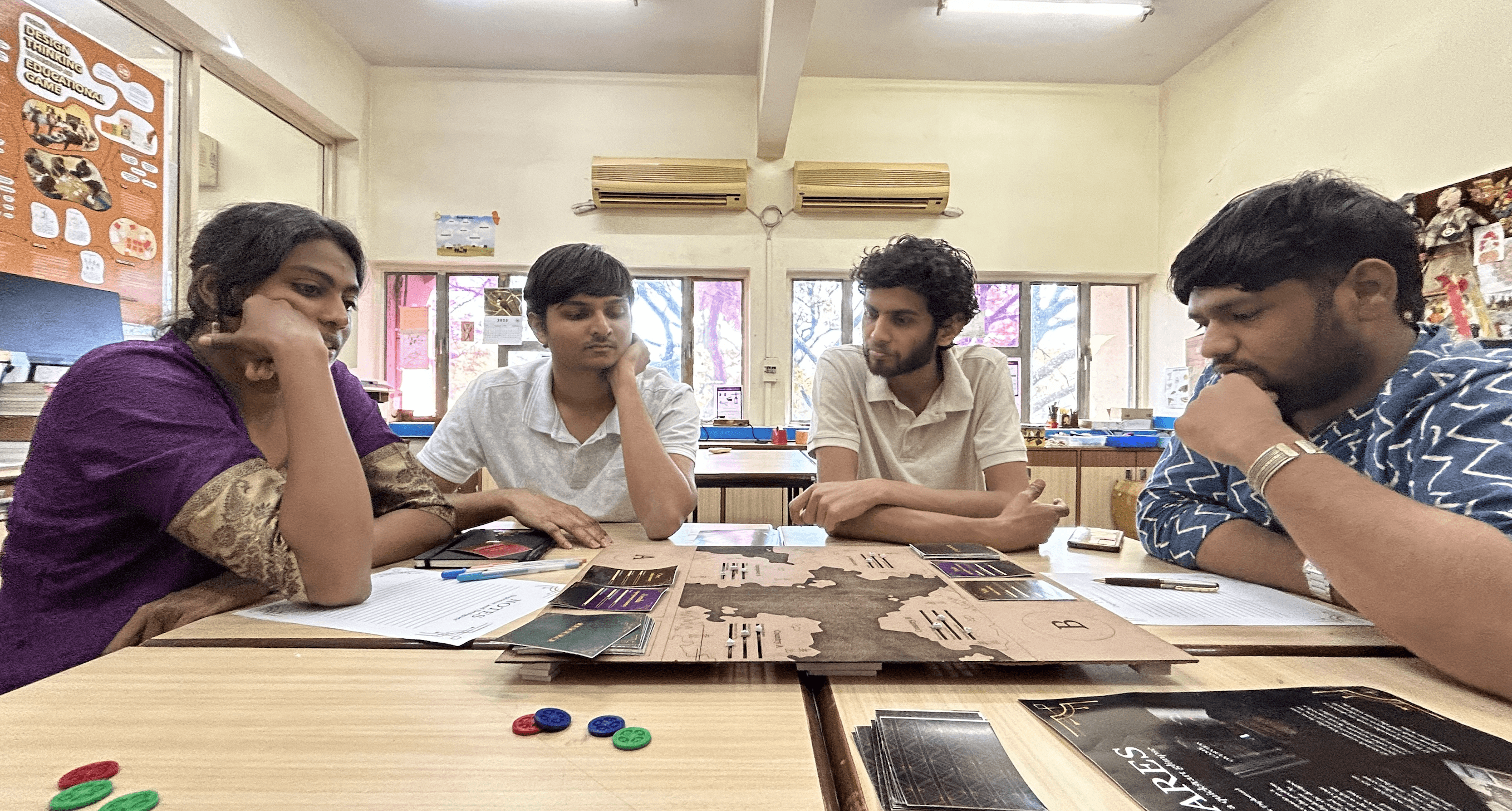
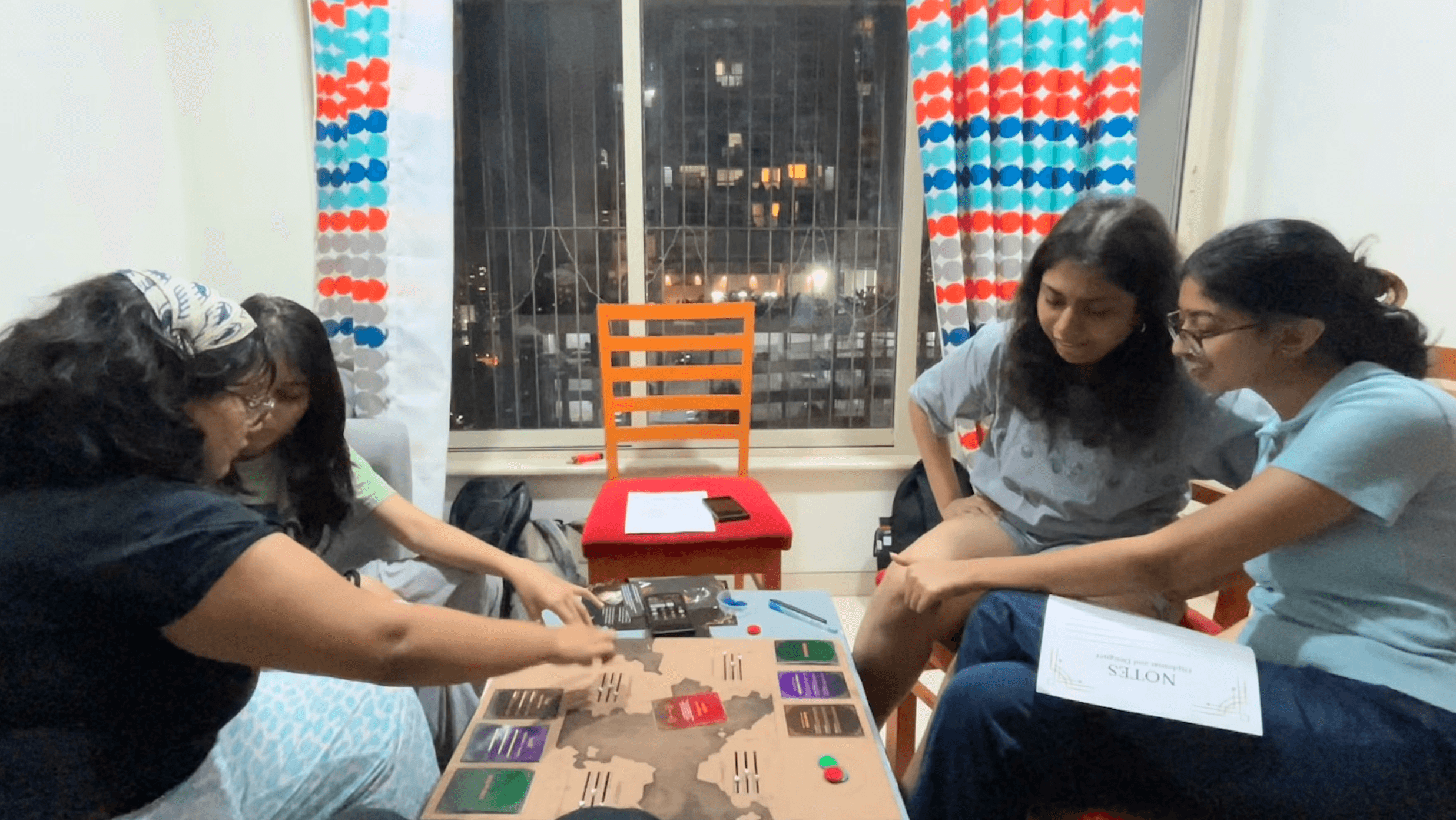
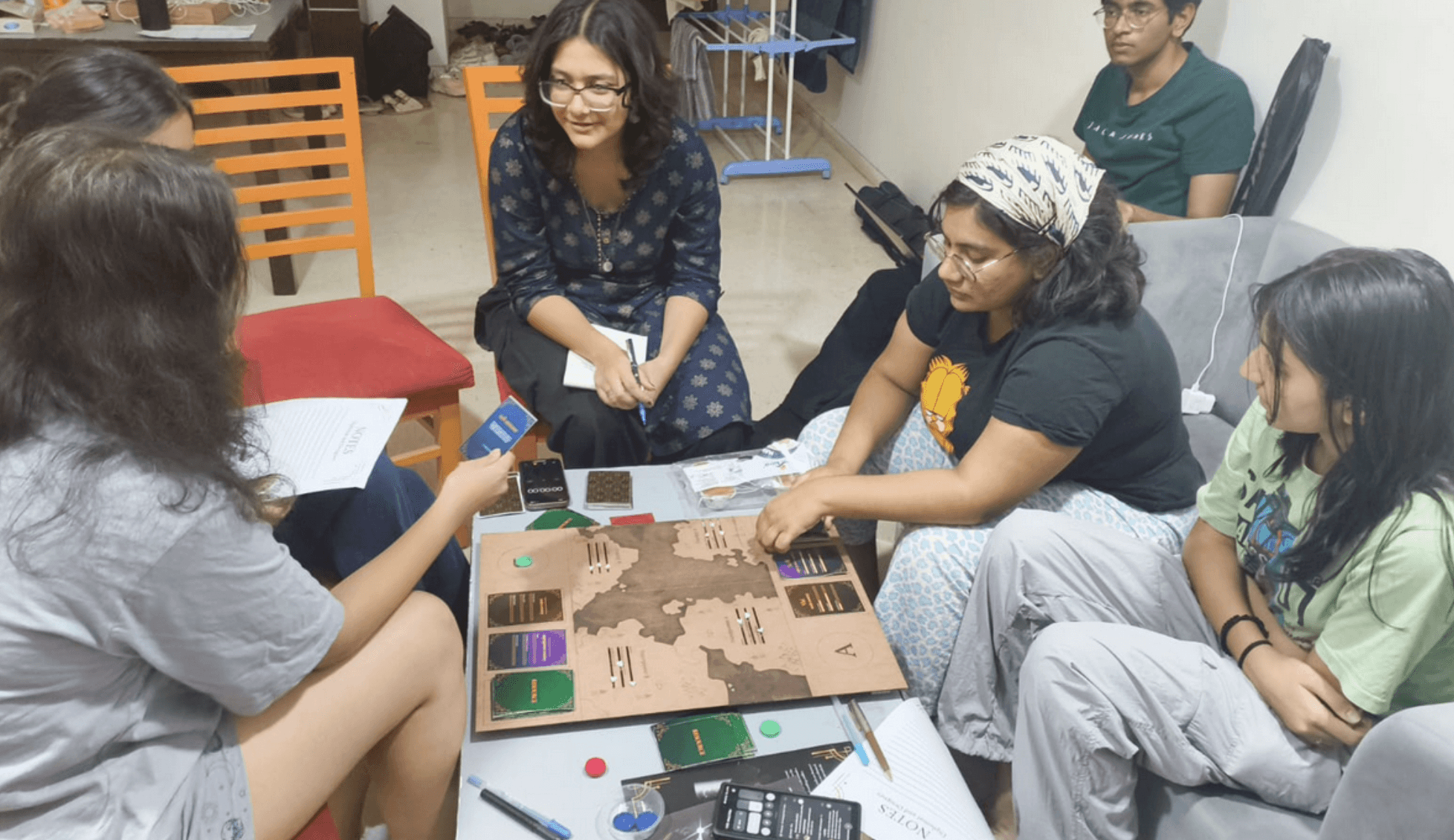
We play-tested multiple versions of our game with our peers, faculty, and people from the industry. What emerged were extremely insightful and hair-pulling gameplays that lasted for hours. People's decision-making throughout the gameplay was influenced considerably by their backgrounds, their exposure to geopolitical contexts, finding workarounds with game mechanics, and their ethical interpretations of the situations at hand. These parameters served as the backbone for our process of synthesising data to arrive at 11 design principles and ultimately a manifesto of good design for the designers of the future.
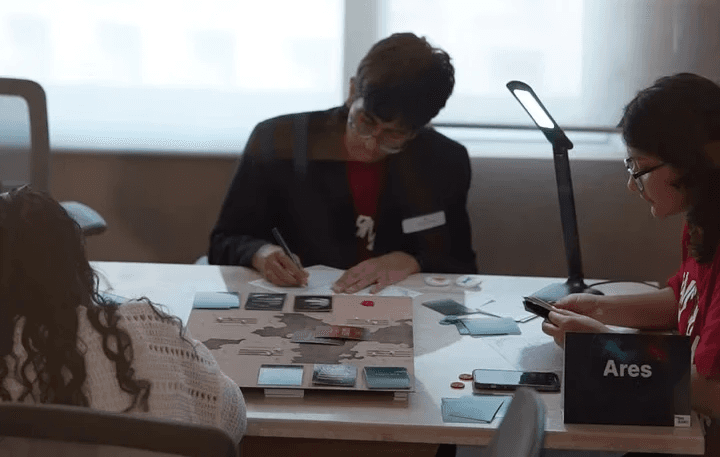
“ Mental health being referenced in war made me realise how diluted the topic has become in day to day lives.”
“As someone from commerce, if I were to interpret more regional powers, I would try to find and strike more deals with nations to get me into a good position.”
“Needs of all working groups with families need to be addressed; minimum aid is a must for different ethnic groups."
“Though it was a good interpretation of playing a designer and a diplomat because I feel like we always think of solutions in a very diplomatic way anyway."
“The soaring food prices set the tone for us and we solutioned for the other problems keeping original sustainability in mind."
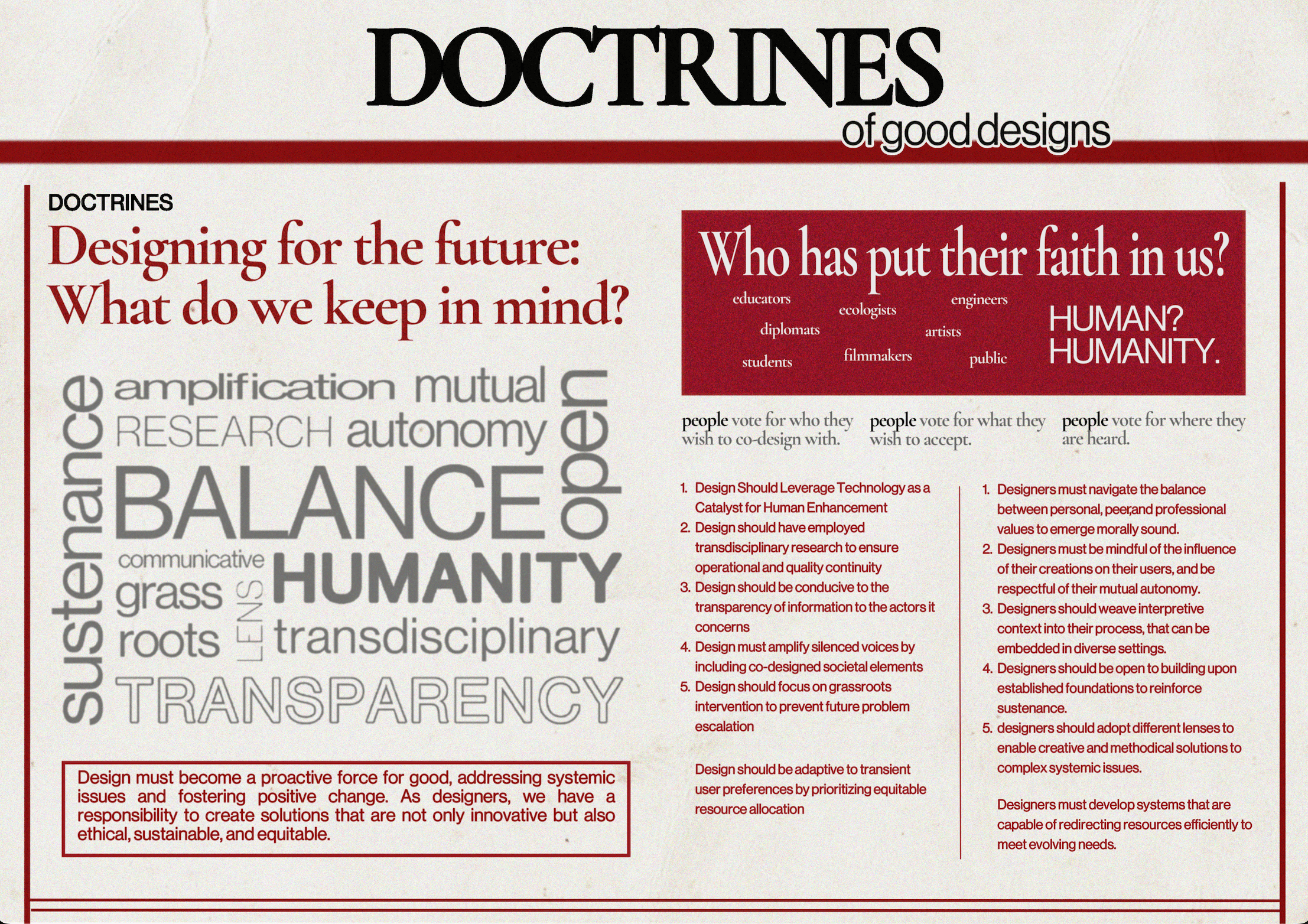
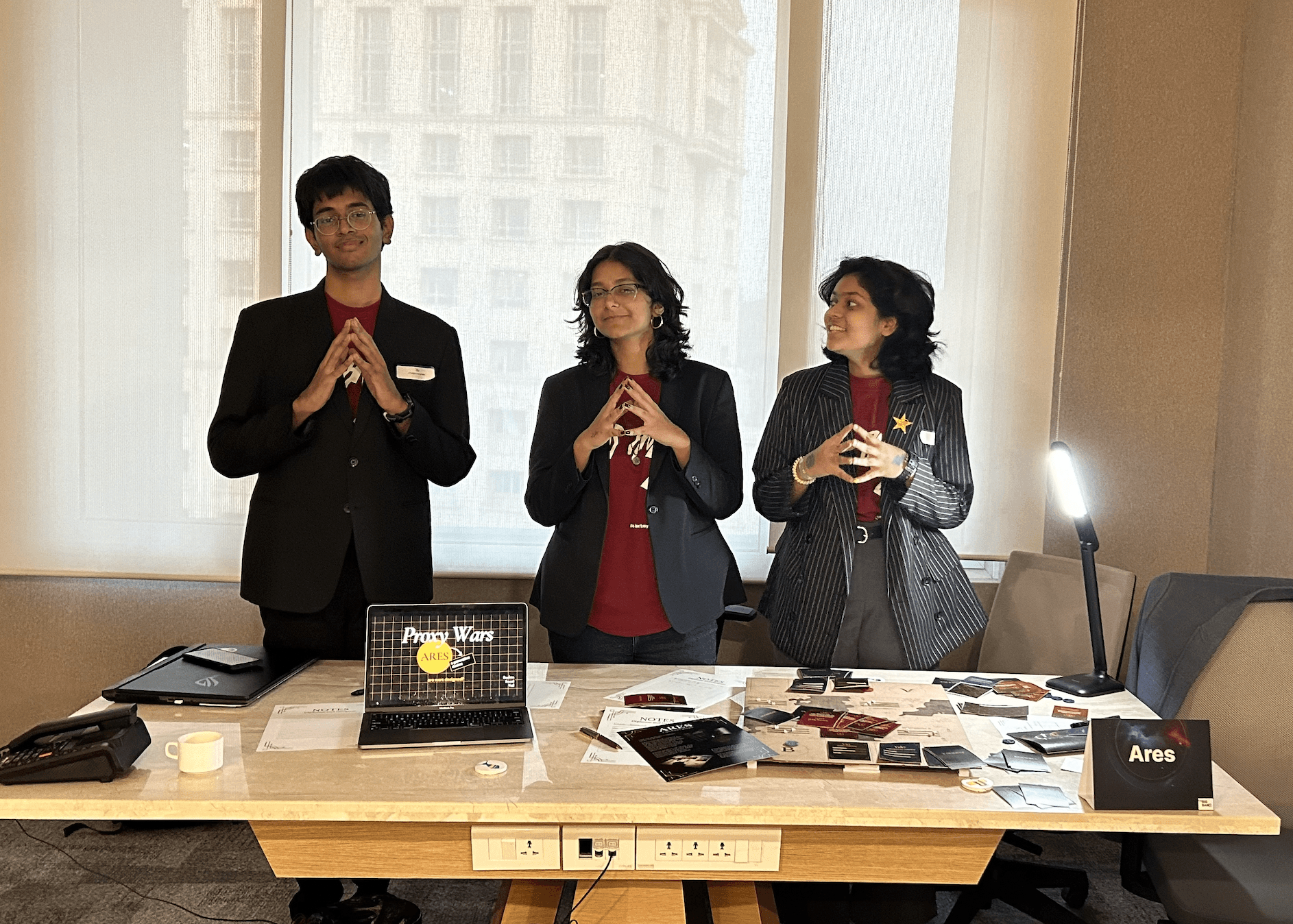
It was extremely encouraging to see people engaging with the game with playfulness combined with extensive reflection in their strategic decisions. Some people even urged us to develop it into a fully fledged game, much like SHAASN (one of our inspirations).
The breakdown and translation of a topic as sensitive, imperative and nuanced as the above; the multiple iterations; the polishing of game mechanics; and the hair-pulling, popcorn-worthy gameplays created with eccentric teammates will remain one of my utmost beloved experiences of design college.
Next Project