Soil to Stall
I went to BhuAmrit thinking I’d study organic products; I came back having studied people. What started as a design student trying to fix some labels for a college module became a slow unpacking of trust, labour, product relationships and the micro-decisions that keep a system running. Somewhere between the mustard oil jars and jaggery pouches, I stopped squinting at packaging and dissected a larger system designed with care.
With its main office nestled in the foothills of Uttarakhand in Roorkee, BhuAmrit is a farmer producer company (FPO). It works across 25 villages, with over 80 organic and natural products, and one big idea: the farmer isn’t just the start of the chain but rather a part of every link who deserves dignity and unaltered, profitable supply chains; as I quote Mr. Naveen Kumar, CEO:
Seeding the fields together
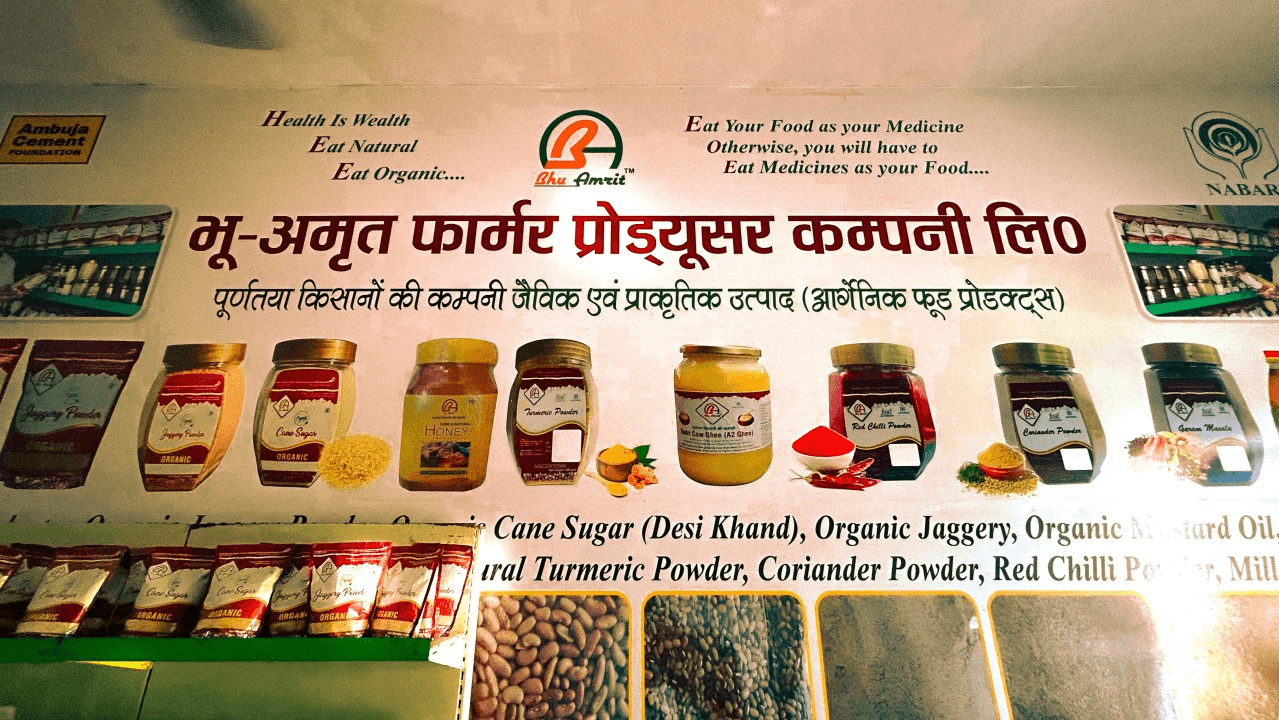
| "Unka kaam ganne tak hi seemit nahi rehna chahiye”.
[Their work shouldn't be limited to their sugarcane]
This vision that extends a farmer’s boundaries far beyond the fences of their irrigated fields is what anchors BhuAmrit’s mission: to maximise farmer profit margins, not middleman margins. Every sticker, every subsidy, and every piece of equipment used points to that.
When I entered this system as a student, freshly trained to wear the designer’s eye, I was enthusiastic to find leverage points, conduct research, rebrand a logo here, redesign a more ergonomic product there, and the usual, as we know. But quickly, it became less about spotting problems and more about tracing patterns. Between farmers and fertiliser bags, sticker sheets and WhatsApp orders, what unfolded was a richer social choreography that I was about to get my hands dirty in.
Systems Have Guardian Angels. Choose Yours.
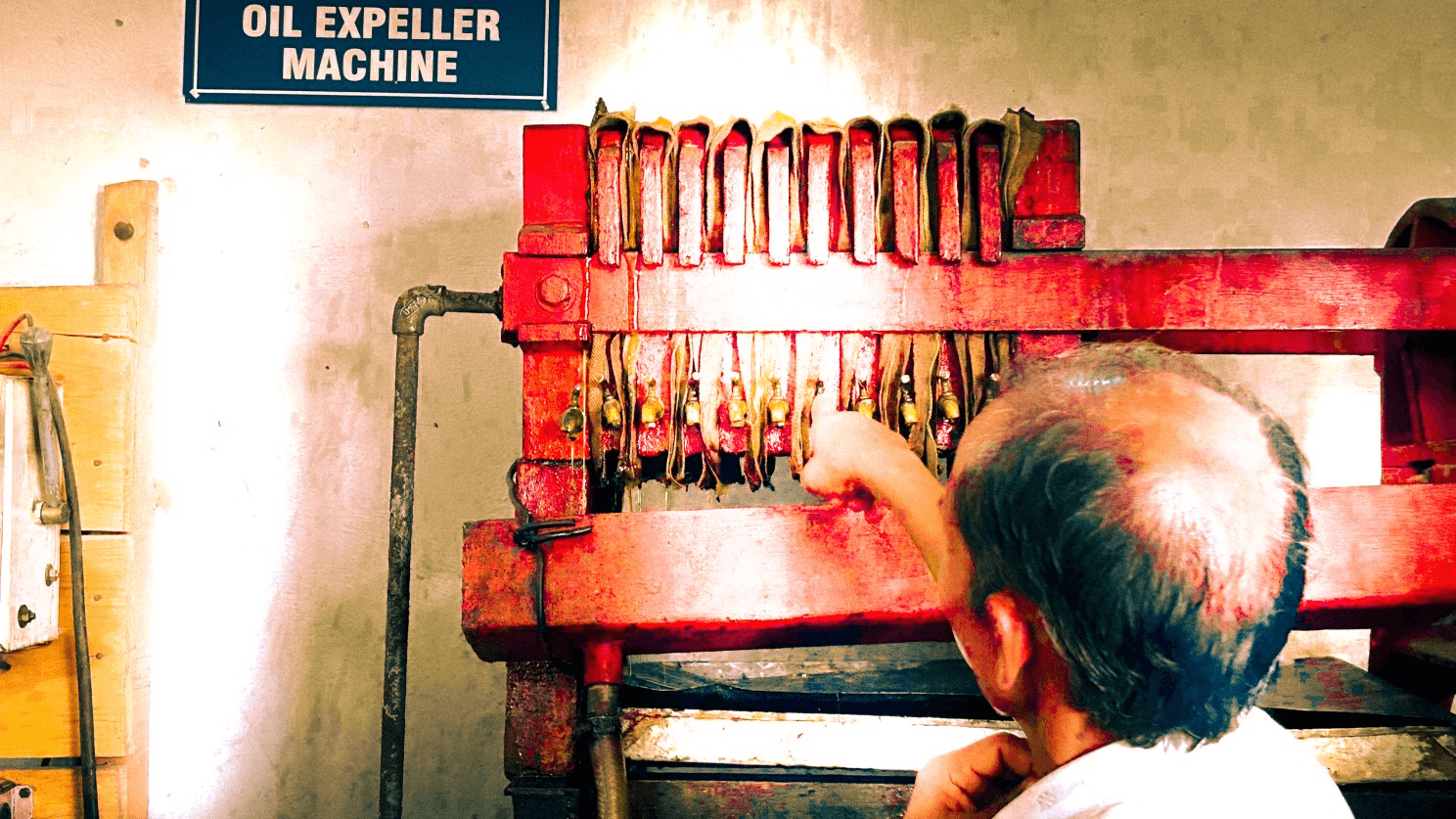
Let’s talk mustard cake: the byproduct of cold-pressing mustard oil. Processed through the oil-expeller machine at BhuAmrit, these seemingly waste products aren’t nearly so. It’s repurposed by women SHGs as cattle feed, sold to fisheries as bait, and even reabsorbed into the soil as micronutrients; dessert, if you will, for a circular economy.
This sustainable, well-designed, organic vision was a venture initiated through the Unnat Bharat Scheme by the Government of India under NABARD with Ambuja Foundation’s CSR activity. To ensure a seamless flow for the farmers without major roadblocks that they otherwise face, BhuAmrit takes care of the majority of the backend processes. The flow goes something like this: crops are grown with BhuAmrit-supplied organic inputs, processed with solar-powered machines calibrated by IIT researchers, then bottled, sealed and stickered (manually), and sent to roadside stalls like the one at IIT Roorkee. There, the jars sit for about five hours a day, sold mostly to professors and students who preorder groceries over WhatsApp.
Rishi Pal ji Showing the Oil Expeller Machine
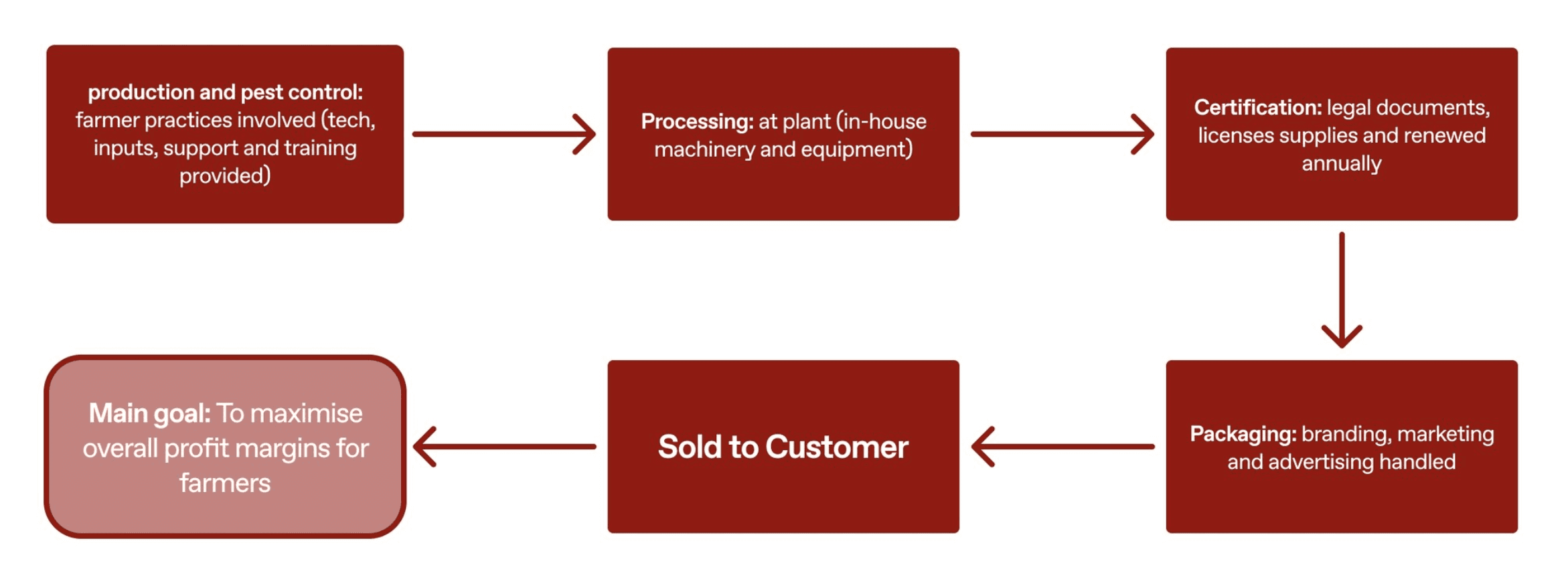
Being in the proximity of IIT Roorkee, researchers and interns often bring tech-oriented improvements— like optimising processing temperatures for pulverisers or tweaking sealing machines. But the loop doesn’t end there; the farmers produce, process and use it themselves, making waste almost obsolete and recyclability embedded in their livelihoods.
Process flow
| "Bas nuksaan nahi hona chahiye bimaari ki wajah se,"
[Just there should be no loss because of the disease]
-said Meherbaan ji and his father, both farmers battling pests in their sugarcane fields, willing to invest if it promised a healthy produce, giving me an insight about their basic user need. As long as the crops don’t suffer from disease is the design brief they provide to BhuAmrit, who help them obtain the right medicine for their fields.
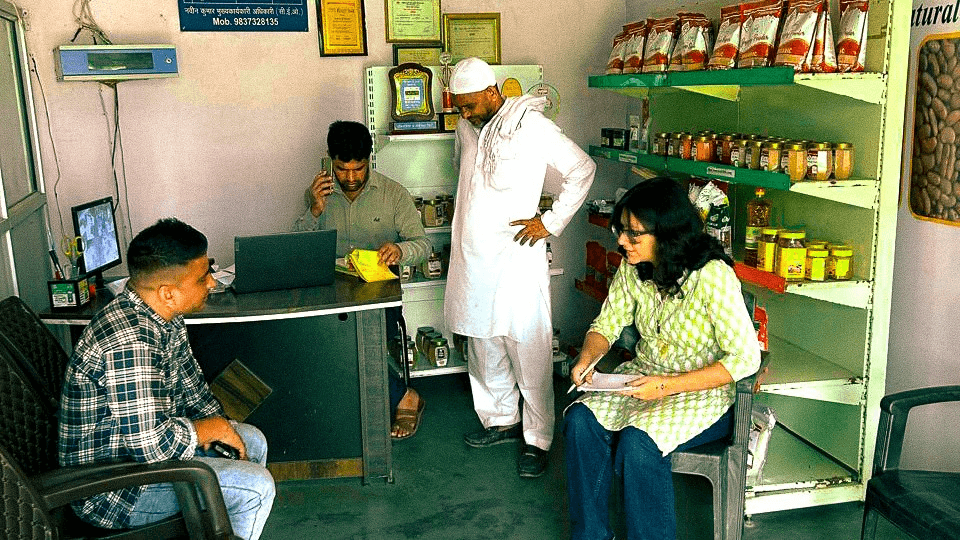
Interview with Meherbaan ji and His Father
At some point I stopped looking at flow and started looking at force. Who’s holding this system up? That’s when the Quadruple Helix stopped being a theoretical model to me and started showing up in the tiniest details. At BhuAmrit, all four strands of the helix— Government, Academia, Industry and Community— play an active, interwoven role, often impactfully with the common greater good in mind. Whether it was a government subsidy, a technical adjustment, jars shaped by Ajanta moulds, or a didi sealing them by hand, it was a system birthed out of overlaps and collaborations across societal sectors.
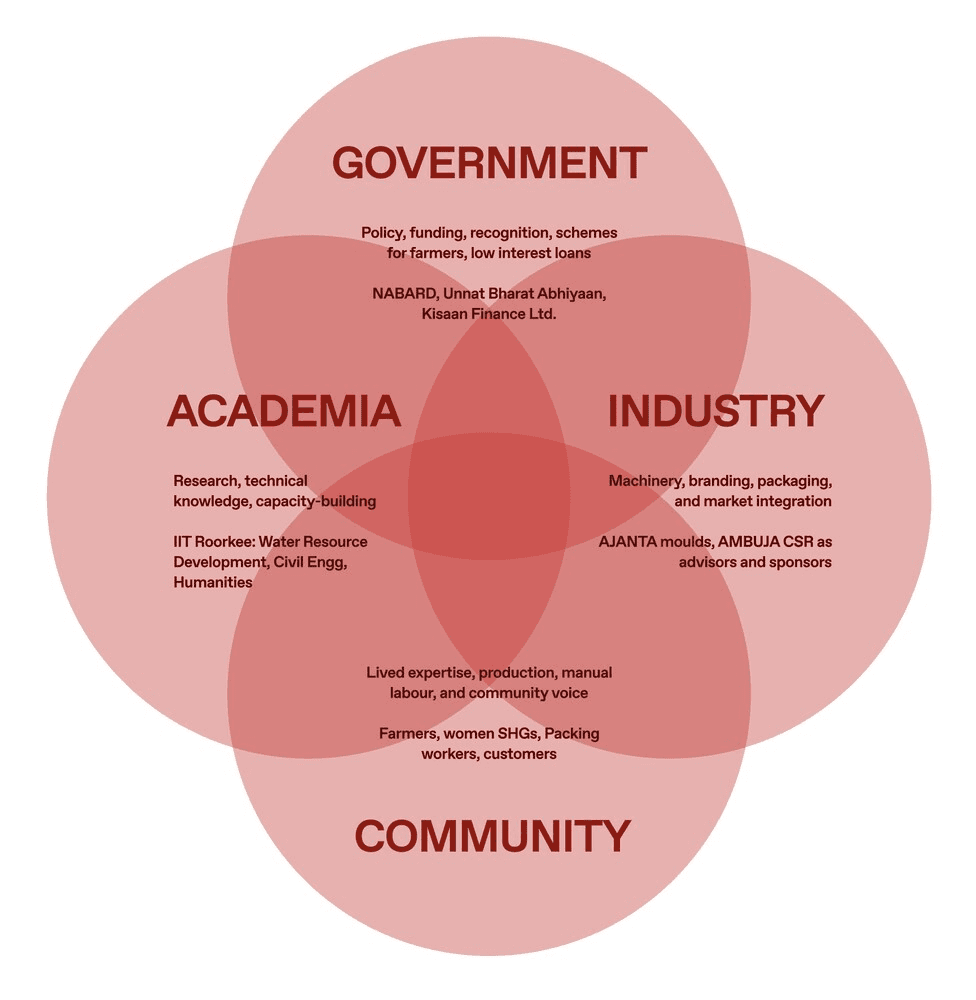
The Quadruple Helix
-aptly said by Mr. Naveen. They’re doing the work of society, the government, and the farm, and it manifests in numerous forms, majorly the satisfaction with which the farmers enter the FPO office, whether to discuss the monsoon rains, the crop turnover for the season or for a little chat with little worry.
| "Society ka kaam ham dekh rahe hai, sarkaar ka bhi, khet ka bhi,"
[We're doing the work of society, (and) the government, (and) the fields as well]
The Puris in My Kitchen Yearn for Designer Ghee
When the design intervention part came, I could outline a few areas. Some products had no labels. Some had labels you couldn’t read. Others were limited trial batches, exclusive items or heavily seasonal with no identifiers. One could provide suggestions like a modular sticker system for trial batches? Rebranding the stickers for more comprehensibility? Automating some tedious labour? But every step, like manual sealing, wasn’t a constraint and was more of an empowerment and ode to priority through necessity. Their system worked on a proof of belief and I set out to detangle the layers of this belief system.
At the IIT stall, Ms Urmila asked for a specific type of rajma from the mountainous regions like Dehradun. When Mr. Arvind, the head of marketing, told her it wasn’t available since they were wary of matching with market prices, she said:
| "Dhanka hi khaayenge. Sugar, BP, control rahega. Aap hamare liye lao, mai khareedungi."
[We'll eat decent and healthy only. Sugar, BP will be in control. (You) Bring for us, I'll buy for sure.]
It was more than preference; it was preservation. This blind trust she has for BhuAmrit’s organic products and their cause and her awareness about bodily benefits allow her to indubitably spend on a healthier alternative for herself and her family sourced from her shared origins – the hills.
While decoding an average customer at a BhuAmrit stall through behaviour analysis and interviews, Mr. Arvind mentioned how they mostly had repeat customers who had been buying their products since the beginning. Moreover, due to the students’ and professors’ eager demands and preorders to buy their hero products like mustard oil, ghee, flour, honey, infamous multigrain biscuits, etc., BhuAmrit shifted from monthly stalls to setting up shop every week. These people knew the history of the FPO and the products themselves; hence regular and new customers alike weren’t aware of the range of products they sold.
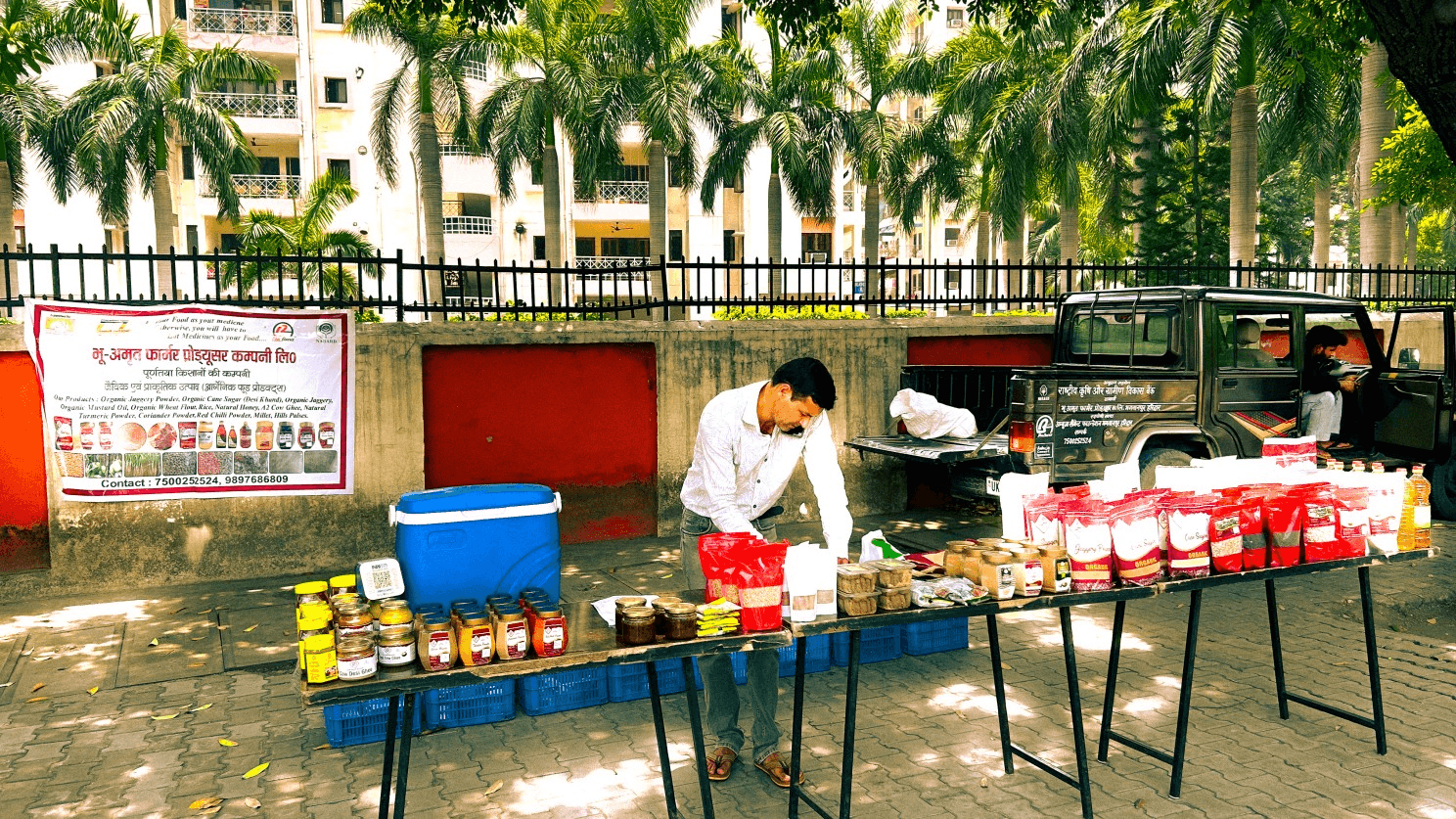
Roadside IIT Stall
Seeing the willingness of the buyers to try out new products, I surmised that a catalogue outlining the availability, exclusivity, quality and range of products could be designed meticulously to reflect these attributes of trust, history and awareness that people associate with the FPO’s belief system. After all, my parents, who keep buying the same three products, claiming them as staples, should definitely browse the range!
Mr. Sanjay Kumar, head of Ambuja Foundation Roorkee Chapter, said something that will perhaps stick with me throughout my ethnographic design research journey:
| "Gaon me heart attack pe camps sab laga rahe hai, lekin heart attacks kyu badh rahe hai, vo koi nahi dekh raha. kyunki numbers nahi niklenge."
[Everyone is setting up camps about heart attacks in villages but no one is worrying about why heart attacks are increasing. Because you can't put your numbers (people they reach) there.
Some noble systems that set out to solve a problem from the core, improve some livelihoods or work for humanitarian good aren’t made for counting but rather for continuity. Their impact isn’t found in numbers or on the news but inside the changed homes of a farmer with an improved quality of living. This change is what design can muster, deliver and thus must serve as.
My design journey with BhuAmrit wasn’t one full of disruption but one of deep introspection and respect for invisible communities around us that sometimes give us the little joys of finding the perfect ghee for home-cooked, papery-crisp puris to enjoy with the evening chai.
written in july 2025